

Haircut styles for thick wavy hair fade work best when the cut is built around your texture instead of fighting it. If you have ever left a salon with a style that looked great on the model in the photo but turned into a triangle on your own head, you already know the problem. thick wavy hair fade has its own rules. It holds volume, thick wavy hair fade bends instead of curling or falling straight, and it reacts to layers, length, and even the weather in ways that fine or straight hair never will.
The good news is that thick wavy hair fade is one of the most versatile textures out there once it is cut correctly. This guide walks through what actually works, how to figure out what suits your face and lifestyle, what to say to your stylist so nothing gets lost in translation, and how to look after your cut once you leave the chair.
Is My Thick Wavy Hair Fade a Blessing or a Battle?
Honestly, it is both, and that is completely normal.
Thick wavy hair fade gives you natural body, movement, and dimension that a lot of people pay good money to fake with extensions or perms. It rarely falls flat, it photographs well, and it can carry longer lengths without looking stringy. That is the blessing part.
The battle shows up when the wrong cut is layered on top of that texture. Thick hair carries more weight per strand than fine hair, so a cut that is not shaped properly can end up:
- Looking wide or triangular instead of rounded
- Feeling heavy at the bottom while the top stays flat
- Frizzing out instead of forming defined waves
- Taking twice as long to dry or style
None of that means your hair is “difficult.” It means most haircuts on the market are designed with straight or fine hair in mind, and thick, wavy hair needs a different approach to the same idea. Once a stylist removes the right amount of bulk in the right places, the texture stops fighting you and starts working for you.
What Kind of Styles Actually Work for Thick Wavy Hair Fade ?
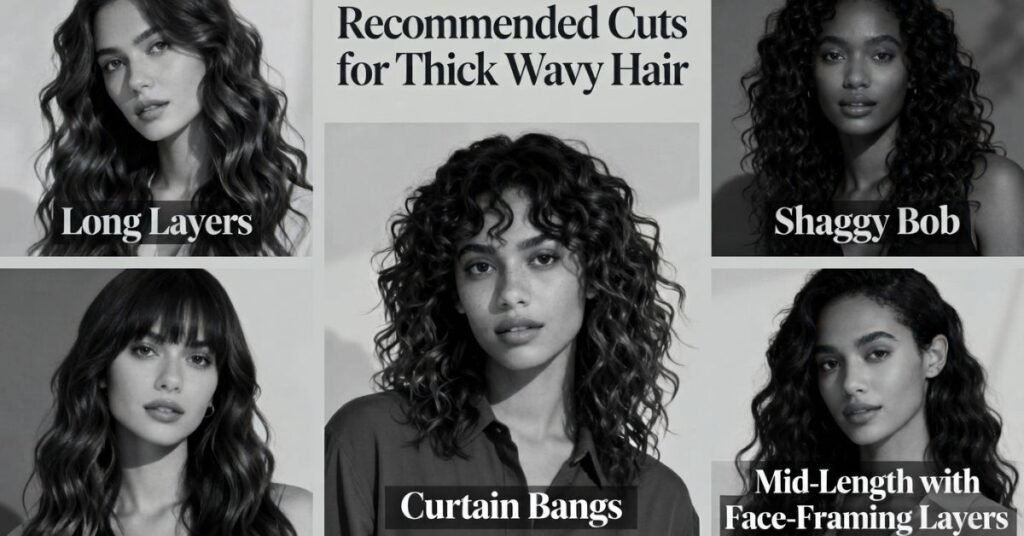
The common thread across cuts that suit thick wavy hair fade is layering that removes weight without removing shape. Blunt, one-length cuts tend to sit heavy and can look like a solid block, while cuts with movement built in let your natural wave pattern show through. Here are the styles that consistently perform well on this texture.
1. Long Layers
Long layers are the safest, most flattering starting point for most people with thick wavy hair fade. Layers cut from the mid-lengths down to the ends thin out bulk while keeping overall length, which lets your waves move instead of sitting in one dense mass. This cut works on almost every face shape and grows out gracefully, so it is a smart pick if you are not ready for frequent trims.
2. Shaggy or Wolf Cut
The shag and its modern cousin, the wolf cut, are built for texture. Heavy, choppy layers throughout the crown and sides break up density and give wavy hair a lived-in, tousled finish. This style genuinely gets easier to wear the more texture your hair has, which makes it one of the best haircut styles for thick wavy hair fade if you want something low effort with a lot of personality.
3. Layered Bob or Lob
A blunt bob can look heavy and almost helmet-shaped on thick hair, but adding soft internal layers or cutting it as a long bob (lob) solves that instantly. The layers let waves fall naturally around the face instead of pushing outward, and the shorter length reduces overall weight, so your waves bounce back more easily between washes.
4. Face-Framing Layers with a Curtain Fringe
If you want to keep most of your length but still lighten things up, face-framing layers paired with curtain bangs soften the hairline and draw attention to your features. Curtain fringes blend well with wave patterns because they are cut to sit and move with the hair rather than against it, unlike a blunt, full fringe which can look overly thick on this texture.
5. The Butterfly Cut
The butterfly cut combines short, voluminous layers on top with longer layers underneath, creating a winged effect when the hair moves. It was practically made for thick, wavy hair since it needs texture to really open up and show its shape, and it adds lift at the crown without adding unwanted width.
6. Short Layered Pixie or Crop
For those ready to go short, a layered pixie or textured crop can look incredible on thick wavy hair fade, provided the sides and back are thinned out properly. Skipping the thinning step is the most common mistake here, since it is what stops the cut from puffing out instead of sitting close to the head.
Styles to approach carefully:
- Micro fringes or very short, blunt bangs, which tend to look puffy rather than sleek
- Ultra-long layers with no internal shaping, which can weigh the whole style down
- One-length blunt cuts below shoulder length, which often look triangular
How Do I Know Which Haircut Will Look Good On Me?
Texture is only one piece of the puzzle. Face shape, hair density, and how much time you actually want to spend styling each morning all factor into the final decision.
Start with your face shape
- Oval faces can wear almost any of the cuts above, including blunt bobs and long layers, since the proportions are already balanced.
- Round faces generally look best with layers that add length, such as long layers or an angled lob, rather than a cut that adds width near the cheeks.
- Square faces benefit from softness, so waves or layers that start below the jaw help ease a strong jawline.
- Heart-shaped faces pair well with chin-length or longer bobs and side-swept layers, which balance a wider forehead against a narrower chin.
- Diamond faces tend to suit layers that start at or below the jawline, adding width at the bottom to balance high cheekbones.
Factor in density, not just texture
Two people can both have “wavy hair” and need completely different cuts. If your hair is thick and coarse, you likely need more layering to remove bulk. If it is thick but fine in individual strand width, lighter layering is often enough, since over-thinning can leave ends looking wispy.
Be honest about your styling habits
A cut that needs a diffuser and styling cream every single day is not realistic for everyone, and that is fine. Shaggy layers and the wolf cut are more forgiving of air-drying, while a sleek layered bob usually needs a bit more intentional styling to look its best.
Bring the cut to a real consultation
Photos help, but a face-to-face consultation lets your stylist look at your natural wave pattern, hairline, and growth direction in person. A five-minute chat before the first snip prevents most regrets.
What Should I Tell My Stylist So I Get the Cut I Want?
Miscommunication is the number one reason people leave the salon disappointed, and it is almost always avoidable with a clearer brief. Here is what to cover before the scissors come out.
- Name your texture, not just your hair type. Say “thick and wavy” specifically, since “thick” alone can be interpreted as coarse straight hair, which is cut differently.
- Describe the finished length in inches or a landmark, such as “collarbone” or “just past the shoulders,” instead of vague terms like “medium.”
- Explain how much volume you want removed. Phrases like “take out the bulk underneath but keep the length on top” are far clearer than “make it lighter.”
- Show reference photos of hair with a similar texture to yours. A photo of straight hair styled a certain way will not translate the same way onto wavy hair.
- Mention your styling routine honestly. Tell your stylist if you air-dry most days, since that changes how they angle and layer the cut.
- Ask how the cut will grow out. A good stylist can tell you whether the style still looks intentional at the six or eight week mark, or whether it needs frequent trims to hold its shape.
- Bring up any recurring frustrations, like frizz at the crown or flatness on top, so the stylist can adjust the cutting angle to address them directly.
A clear, specific brief takes the guesswork out of the appointment and gives your stylist everything they need to shape the cut around your actual hair, not an assumption of what “wavy hair” looks like.
Are There Any Specific Hair Care Tips for My New Thick, Wavy Cut?
A great cut only stays great with the right upkeep. Thick, wavy hair has specific needs that differ from straight or curly routines.
- Use a hydrating, sulfate-free shampoo and conditioner. Thick hair can handle richer formulas without looking greasy, and moisture helps define waves instead of letting them frizz.
- Apply product to damp hair, not dry. Curl creams, light mousses, or anti-frizz serums work best when hair is still wet, since they help set the wave pattern as it dries.
- Diffuse instead of air-drying on humid days. Diffusing on a low, warm setting enhances natural wave definition and cuts down on frizz far more effectively than letting thick hair air-dry unassisted.
- Scrunch, do not rub, with your towel. A microfiber towel or an old cotton t-shirt reduces frizz that a regular towel tends to create.
- Get trims every 8 to 12 weeks. Layered cuts on thick, wavy hair grow out fastest at the face-framing pieces, so regular trims keep the shape intact.
- Sleep on a silk or satin pillowcase. This small swap reduces friction overnight, which means fewer flyaways and less frizz by morning.
- Avoid over-brushing dry hair. Detangle with a wide-tooth comb or your fingers while conditioner is still in the hair, since brushing dry waves breaks up the curl pattern and creates frizz.
- Use a lightweight oil on ends only. A few drops on the ends after styling adds shine without weighing down the roots or flattening volume at the crown.
FAQs
What is the best haircut for thick, wavy hair?
Long layers are usually the safest and most universally flattering choice, since they remove bulk while keeping the length and letting your natural wave pattern show.
Does thick, wavy hair need more layers than straight hair?
Generally yes. Thick hair carries more weight, so it typically needs more internal layering to avoid looking heavy or triangular.
How often should I get my wavy hair layers cut?
Most layered cuts on thick, wavy hair hold their shape best with trims every 8 to 12 weeks.
Can I get bangs with thick, wavy hair?
Yes, but curtain or side-swept fringes usually work better than blunt, full bangs, which can look overly thick and puffy on this texture.
Should I diffuse or air-dry thick, wavy hair?
Diffusing on low heat generally gives more defined, frizz-free waves than air-drying alone, especially in humid climates.
Ready to Embrace Your Waves?
Thick, wavy hair is not something to manage into submission, it is a texture that rewards the right cut with almost no extra effort. Once you understand how layering, face shape, and your own styling habits fit together, choosing a flattering haircut stops being guesswork and starts being straightforward. Bring a clear brief to your next appointment, trust the process, and let your natural texture do what it does best.

