

A shaved line on the side of the head is one of the fastest ways to turn a plain fade into a haircut people actually notice. See 17 haircuts with lines on the side, including hard parts, double lines, curved fade designs, placement tips, barber wording, and touch-up notes.costs nothing extra at most barbershops, takes under a minute to cut, and works on almost every hair type, from pin straight to tightly coiled.
This guide walks through 17 real side-line styles, how to ask for each one, which face shapes and hair textures suit them best, and how long the line will actually hold up before you need a touch-up.
Test the side-line haircut on your own photo
Before you commit to a razor line, it helps to see it on your own head shape rather than someone else’s. A quick way to do this is to snap a clear, front-facing photo in good light and use a hairstyle try-on app or your barber’s consultation software to sketch a line over it. Many barbers will also do this with a washable marker or eyebrow pencil right in the chair, so you can check the placement before a single hair is cut.
Try a hard part fade first
If you’re new to side-line haircuts, the hard part fade is the easiest entry point. It’s a single, straight line that separates a side part from a fade, and it’s simple for almost any barber to execute cleanly on the first try. Ask for it in a natural part, and you get the design payoff without much commitment, since it grows out gracefully and doesn’t need weekly upkeep.
Key takeaways
- A side-line haircut is a thin strip of skin or very short hair shaved into a fade, taper, or undercut with clippers or a straight razor.
- The most beginner-friendly options are a single hard part line or a low fade with one thin line, since both are quick to cut and easy to maintain.
- Straight hair holds the sharpest, cleanest lines, while curly and coily hair can still carry a line design, it just needs slightly more frequent touch-ups.
- Most side lines need a refresh every 1 to 3 weeks, depending on how fast your hair grows back.
- Bringing a reference photo to your appointment is the single best way to avoid miscommunication with your barber.
Quick answer
A haircut with a line on the side is created when a barber uses clippers, a T-liner, or a straight razor to shave a thin channel through the hair, usually along a fade, taper, or part. The most popular versions include a single hard part line, a curved burst fade line, double temple lines, and a full side-part line with longer hair on top. Any fade or taper can carry a line design, and the style suits short, medium, and even longer haircuts.
Start with the base haircut
A side line is a detail, not a haircut on its own. It needs a base style to sit inside of, so the first decision is what kind of fade or taper you want underneath it.
Common base cuts for a line design include:
- Low fade, where the fade starts just above the ear
- Mid fade, starting around temple height
- High fade, starting near the top of the head for maximum contrast
- Taper, a gentler, gradual blend with no hard fade line
- Undercut, where the sides are cut very short and the top stays long
Once you and your barber settle on the base, the line becomes a finishing touch that’s added last, typically with a T-outliner or a straight razor for the sharpest edge.
17 haircuts with lines on the side
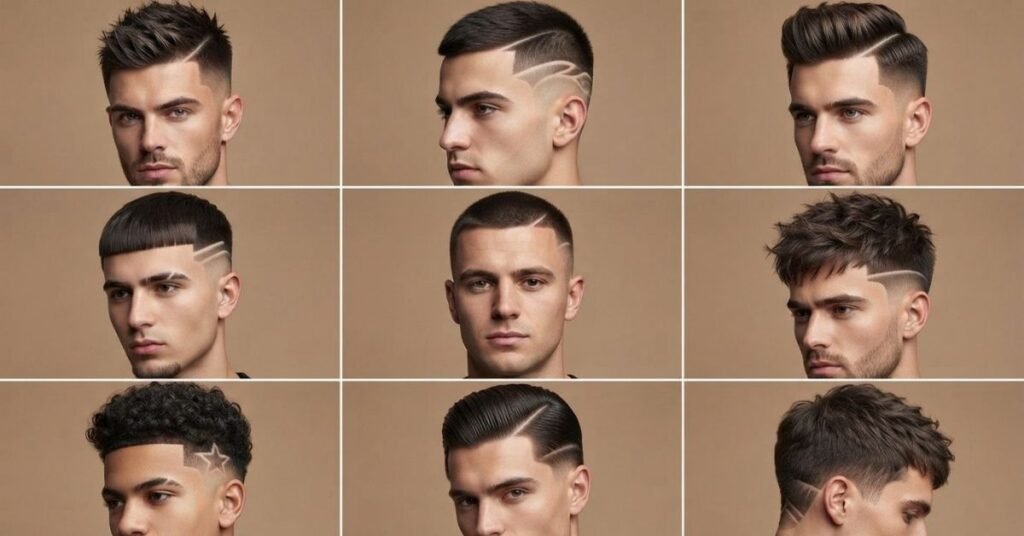
1. Low fade with one thin side line
A single, thin line runs through a low fade, usually starting just above the ear and curving slightly toward the temple. It’s subtle enough for an office job but still gives the cut a designed, intentional look. This is one of the most requested combinations at barbershops because it reads as clean rather than flashy.
2. Mid fade with a hard part
Here, the line does double duty. It separates a side part from the fade underneath, so you get a sharp visual break between the longer top and the tighter sides. This works especially well with a comb-over or slick-back finish.
Compare a cleaner side-part fade
If you already wear a side part, ask your barber to show you the difference between a soft, blended part and a hard-line version. The blended part looks more natural day to day, while the hard-line version photographs sharper and holds its shape longer between washes.
3. Taper fade with a short temple slash
A short, angled slash near the temple adds a burst of detail without covering much surface area. Because tapers already have a soft blend, this small addition gives the cut just enough edge without looking overdone.
Read More: Pixie Hairstyles For Thick Hair: Tapered, Textured, and Bixie Options
4. Two lines on the side of the head
Two parallel lines, usually spaced a few millimeters apart, are shaved into the fade above the ear. It’s a bolder statement than a single line and works particularly well on buzz cuts, crops, and shorter fades where there’s more open space to showcase the design.
5. Double short temple lines
Unlike the longer parallel lines above, these are short, stacked slashes confined to the temple area. They’re quick for a barber to freehand and tend to suit younger clients or anyone who wants a design that doesn’t dominate the whole side of the head.
6. Curved fade line
Instead of a straight line, the barber follows the natural curve of the skull from the temple back toward the ear. This softer shape tends to flatter round and oval face shapes better than a rigid straight line does.
7. Burst fade with a curved side line
A burst fade circles the ear rather than running in a straight band, and adding a curved line that echoes that circular shape creates a cohesive, almost architectural look. It’s a more advanced cut, so it’s worth booking with a barber who has burst fade experience specifically.
Try a curved fade outline
Curved lines are less forgiving than straight ones because any wobble is easy to spot. Ask your barber to outline the curve lightly first, check it in the mirror, then commit to the full depth. This two-step approach catches mistakes before they’re permanent.
8. Comb over fade with a shaved part
This is a dressier take on the classic comb over. A crisp shaved line replaces the usual comb part, giving a polished, barbershop-fresh finish that suits weddings, interviews, and other occasions where you want the cut to look deliberate.
9. Textured crop with a side line
A French crop or textured crop already has movement on top, so a single clean line on the side balances that texture with a bit of sharpness. It’s a popular combination for anyone who wants a modern cut that isn’t too severe.
10. French crop with a small side line
Similar to the textured crop above, but the fringe stays blunt and the line is kept short and close to the hairline. This version leans slightly more classic and works well with a low or mid fade underneath.
11. Buzz cut fade with one razor line
Even the simplest buzz cut gets a personality boost from a single razor line above the ear. Because there’s so little length to work with, the line becomes the main visual detail of the whole haircut.
12. High fade with a geometric line
A high fade leaves a lot of blank canvas on the sides, which is exactly why it pairs so well with a geometric line, think a stepped or zig-zag pattern rather than a simple straight cut. This is one of the more attention-grabbing options on this list.
13. Drop fade with a back-side line
A drop fade curves down behind the ear instead of staying level, and a matching line that follows that drop reinforces the shape. It’s a great option if you want a fade that looks rounded and soft from the front but still carries a sharp design.
14. Side line with beard blend
For clients with a full beard, a side line can be extended down to meet the beard’s fade line, creating one continuous design from the temple to the jaw. This requires a barber who’s comfortable blending hair and facial hair as a single unit.
15. Temple fade afro with a short line
On natural or afro-textured hair, a temple fade already creates strong contrast against the volume on top. A short line at the temple adds definition without disturbing the curl pattern of the rest of the style.
Preview a temple fade shape
Temple fades vary a lot depending on your natural hairline, so it’s worth having your barber trace the shape with clippers before shaving it in fully. This is especially useful if your hairline is uneven, since the line can be positioned to balance it out.
16. Side part line with longer hair on top
When the top is left longer, a shaved line becomes the anchor that keeps the whole style looking structured instead of shaggy. It’s a favorite for anyone transitioning from a very short cut to something with more length on top.
17. Subtle line for school or work
Not every side line needs to be bold. A very thin, single line kept close to the natural hairline gives just enough edge for a school or office setting without breaking a conservative dress code. Ask your barber to keep it shallow rather than shaving all the way to the skin.
Read More: Hair Cutting Style Man Image: Bridging the Gap Between Vision and Reality
How to choose line placement
Line placement isn’t random, it’s usually based on three things: your part, your hairline, and how much of the side of your head you want to show off.
- Near the part. If you already part your hair, placing the line right along that part creates a clean, matched look.
- Above the ear. This is the most common spot because it’s visible from the front and side without needing you to style your hair a specific way.
- At the temple. A good choice if you want a smaller, subtler detail rather than a full-length line.
- Following the fade line. Letting the line trace the natural curve of your fade keeps the whole cut looking unified instead of like two separate design choices stacked on top of each other.
Hair texture and face-shape notes
Hair texture changes how crisp a line looks and how long it lasts.
- Straight hair holds the sharpest, most defined lines and shows the cleanest contrast against skin.
- Wavy hair works well too, though the line may soften slightly within the first week as new growth comes in.
- Curly and coily hair can absolutely carry a line design. The contrast is often even more striking because of the volume on top, but the line itself may need a touch-up sooner since curl pattern can make regrowth more visible.
Face shape matters more for where the line sits than whether you can get one at all.
- Round faces tend to look sharper with straight, angled lines rather than curved ones.
- Square or angular faces can handle bold, straight lines without looking overly harsh.
- Oval faces are the most flexible and can wear almost any line style, straight or curved.
What to tell your barber
Clear communication is what separates a clean line from a crooked one. When you sit down, try to cover:
- Which base haircut you want (fade, taper, or undercut) and how short.
- Exactly where you want the line to start and end.
- Whether you want one line, two lines, or a curved design.
- How deep you want it, a subtle shadow line versus a line shaved down to the skin.
- How often you’re realistically able to come back for touch-ups.
Bringing a photo, even a rough one, removes most of the guesswork and helps your barber match the angle and thickness you have in mind.
Preview the line before you cut it
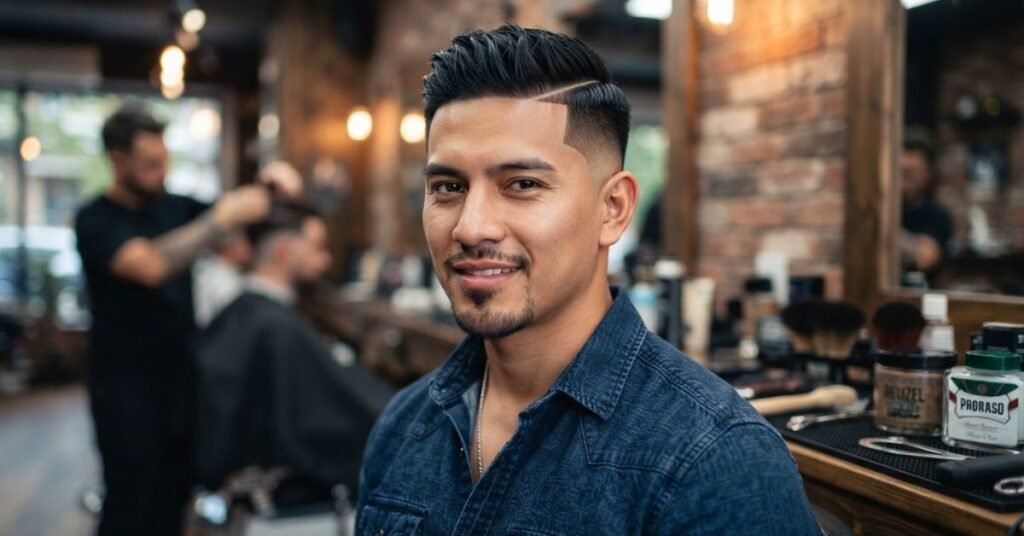
Most experienced barbers will trace a proposed line with the clipper guard on before switching to a bare blade or razor. This gives you a chance to check the placement in the mirror and adjust before anything is permanent. If your barbershop offers digital consultation tools or a hairstyle preview app, it’s worth using one, especially for a curved or geometric design you haven’t tried before.
How long side lines last
A side line is one of the shortest-lived parts of any haircut because it’s cut so close to the skin. On average, most people need a touch-up every 1 to 3 weeks. Faster hair growth, thicker hair, and darker hair color all tend to make the line fill in and fade faster. If you have a barber who does freestyle designs, it also helps to keep the same appointment slot each time so the line stays in the exact same spot.
Skin and maintenance cautions
A few practical things to keep in mind before and after getting a line cut:
- Avoid tight hats or helmets right after a fresh line, since friction can irritate freshly shaved skin.
- Keep the area clean and moisturized to prevent razor bumps, especially if you have sensitive skin or curly hair.
- If you plan to maintain the line yourself between barber visits, use a proper T-liner rather than a razor made for shaving faces, and always go slowly on the first pass.
- See a dermatologist if you notice persistent redness, ingrown hairs, or irritation along the line, since these can become chronic with repeated shaving in the same spot.
Sources
This guide draws on general barbering technique references, including clipper and razor cutting standards taught in cosmetology and barbering coursework, alongside current style trends observed across barbershop portfolios and men’s grooming publications.
FAQ
Are haircuts with lines on the side still in style?
Yes. Shaved line designs remain a staple in modern barbering and continue to appear regularly in fades, tapers, and crops.
What does two lines on the side of the head haircut mean?
It’s primarily a style choice rather than a fixed symbol, two parallel shaved lines that add contrast and detail to a fade or buzz cut.
What is the best haircut with a line for beginners?
A low fade with one thin side line or a hard part fade, since both are quick to cut and easy to grow out.
Should the line be on the left or right side?
It usually follows your natural hair part, so most people place it on whichever side they already part their hair.
Can I get lines with curly or coily hair?
Yes, curly and coily hair can carry line designs well, though touch-ups may be needed slightly more often to keep the line crisp.
How often do side-line haircuts need touch-ups?
Most people need a refresh every 1 to 3 weeks, depending on how fast their hair grows.
Can I cut the side line myself?
It’s possible with a T-liner and steady hand, but a first-time or complex design is best left to a barber to avoid an uneven result.
What should I show my barber?
Bring a clear reference photo and point out exactly where you want the line to start, end, and how deep you want it cut.
Read More : Low Taper Fade Textured Crop Haircut: Top 26 Best Styles for Men in 2026
Bottom line
A line on the side of the head is a small change with a big visual payoff. Whether you go with one subtle line above the ear or a bolder geometric design, the key is choosing a base haircut you like first, then adding the line as the finishing detail. Bring a reference photo, ask your barber to trace the design before committing, and plan on a touch-up every couple of weeks to keep it looking as sharp as day one.

