

A low taper fade for Black men is a versatile haircut that cleans up the temples, sideburns, ears, and neckline while keeping most of the natural hair on top. It works especially well with curls, coils, waves, afros, twists, braids, and locs.
The key is choosing the right version for your hair texture, face shape, hairline, beard, and preferred maintenance level. A low taper can look natural and subtle or sharp and defined depending on how the barber handles the blend and line-up.
Key Takeaways: Low Taper Fade for Black Men
- A low taper fade keeps the taper close to the lower temples, sideburns, ears, and neckline.
- It works with many Black hair textures, including curls, coils, waves, afros, twists, braids, and locs.
- Round faces often benefit from extra height on top, while long faces usually look better with less vertical height.
- A line-up can make the haircut sharper, but it should follow your natural hairline rather than unnecessarily pushing it back.
- A beard should blend naturally into the sideburn area instead of looking disconnected.
- A reference photo is one of the easiest ways to communicate the desired fade height and overall shape to your barber.
- A low taper usually grows out more subtly than a higher fade because less of the side area is removed.
What Is a Low Taper Fade?
A low taper fade gradually shortens the hair around the lower parts of the haircut, particularly the sideburns, temples, ears, and neckline. The upper sides and top generally retain more length.
That is what makes a low taper different from a high fade. The transition stays lower, so your natural shape remains more visible.
For Black men, this makes the style especially flexible. Natural curls, tight coils, waves, sponge curls, afros, twists, braids, and locs can remain the main feature while the edges receive a cleaner finish.
A low taper does not always mean the hair must reach bare skin. Your barber can create a softer transition or take the lowest section very close to the skin, depending on the look you want.
Low taper fade vs low skin fade
A low taper fade focuses on gradually reducing hair around the perimeter while keeping more of the surrounding shape.
A low skin fade takes the lowest section down to skin level. This creates more contrast and usually gives the haircut a sharper appearance.
If you want a natural grow-out and less dramatic contrast, a low taper is often the safer choice. If you prefer a very clean, high-contrast finish, a low skin fade may suit you better.
Which Low Taper Fade Should You Choose?
There is no single best low taper for every Black man. Your texture, top length, face shape, beard, and personal style all matter.
| Low Taper Style | Best For | Barber Note | Maintenance |
|---|---|---|---|
| Classic low taper with curls | Natural curls and coils | Keep the taper low and preserve top volume | 2 to 3 weeks |
| Low taper with 360 waves | Short, dense waves | Protect the wave pattern above the taper | About 2 weeks |
| Low taper with sponge curls | Coily textured hair | Keep enough length for definition | 2 to 3 weeks |
| Low taper with afro | Fuller natural hair | Shape the afro before tapering the edges | 3 to 4 weeks |
| Low taper with twists | Short or medium twists | Clean only the perimeter unless more contrast is wanted | 2 to 3 weeks |
| Low taper with locs | Short or long locs | Blend sideburns and neckline carefully | 2 to 4 weeks |
| Low taper with beard | Fuller facial hair | Connect the sideburn and beard naturally | 1 to 2 weeks for beard cleanup |
| Low taper with line-up | Sharp, defined styles | Follow the natural hairline | 1 to 2 weeks |
| Low taper buzz cut | Very short hair | Keep the taper subtle around the edges | 1 to 2 weeks |
| Low taper with textured top | Short curls or coils | Leave enough length for texture | 2 to 3 weeks |
Low taper with curls
This is one of the easiest combinations for natural hair. Keep enough length on top for your curls or coils to remain visible while the barber cleans the lower perimeter.
Low taper with waves
A low taper works particularly well with 360 waves because the clean perimeter creates contrast without taking too much away from the wave pattern.
Ask your barber not to take the taper too high into the area where your waves are forming.
Low taper with an afro
If you like a fuller silhouette, keep the afro as the main feature and use the taper only around the edges. This gives you a cleaner outline without sacrificing the volume that makes an afro distinctive.
Low taper with twists or locs
For twists and locs, the taper can clean up the sideburns and neckline while leaving the main hairstyle intact. If you want a subtle result, avoid taking the taper too far into the sides.
Low taper with a beard
A beard can make a low taper look more complete, but the transition needs to be intentional. The sideburn should gradually connect the haircut with the beard instead of creating a sudden gap.
Face Shape Fit
The fade itself does not need to change dramatically for every face shape. The bigger difference usually comes from how much volume and height you keep on top.
Round face
A round face usually benefits from additional height and texture on top. A curly top, sponge curls, or fuller short afro can create a more elongated appearance.
Avoid making the sides excessively wide or rounded.
Square face
A square face already has strong jaw definition, so a low taper fits naturally. You can choose a sharp line-up for a more structured appearance or a softer edge for a relaxed look.
A rounded textured top can also soften very strong angles.
Oval face
Oval faces are highly flexible. Waves, curls, an afro, twists, or a short top can all work with a low taper.
Focus more on your hair texture and preferred level of maintenance than trying to correct your face shape.
Long or rectangular face
If your face is long, avoid adding unnecessary height to the top. A flatter or slightly wider style can create better visual balance.
An extremely tall curly or afro top may make the face appear longer.
Heart-shaped face
A heart-shaped face is wider around the forehead and narrower toward the chin. Keeping reasonable fullness near the temples and choosing a balanced top can prevent the haircut from making the forehead look disproportionately wide.
Diamond face
A diamond-shaped face often has prominent cheekbones with a narrower forehead and jaw. Moderate fullness on top with a controlled taper can help balance those proportions.
Texture Hair Notes
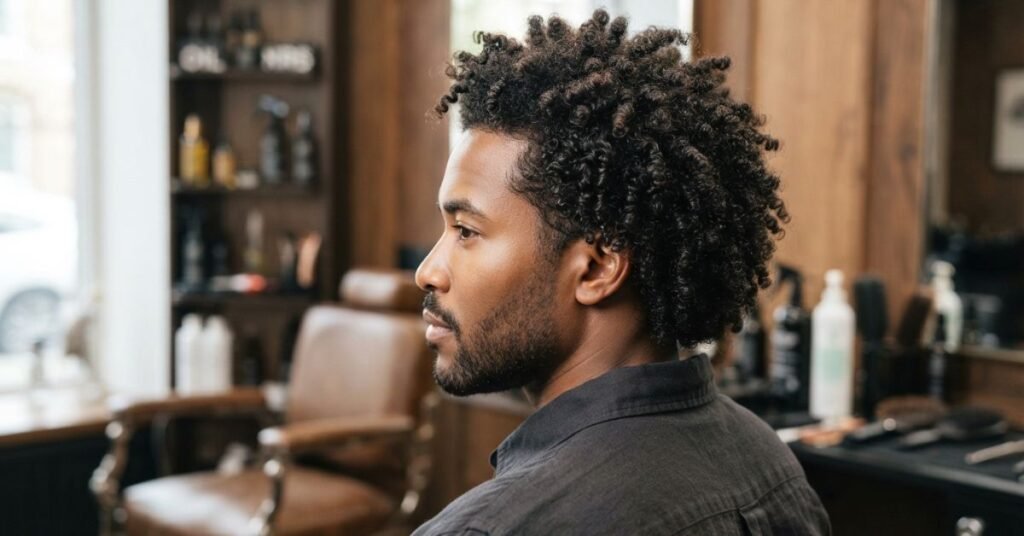
Black hair includes a broad range of curl and coil patterns, so the same low taper can produce different results from one person to another.
3C curls
Looser curls can benefit from a low taper that removes bulk around the ears while preserving curl definition on top.
4A curls
A low taper can frame dense curls without disturbing the overall shape. Keep enough top length if you want visible curl definition.
4B hair
Tighter coils often respond well to a clean perimeter and controlled top shape. Your barber should avoid taking the taper too high if you want to preserve density.
4C hair
With tightly coiled hair, shrinkage can make the finished top appear shorter than expected. Discuss the desired shape before the barber starts cutting.
If you want a fuller natural look, make it clear that the goal is to clean the edges rather than significantly reduce the top.
Waves
Waves need consistency. Tell your barber to preserve the pattern and avoid cutting too far into the wave area.
Twists, braids, and locs
The taper can be used as an edge-cleaning technique around a protective or longer hairstyle. Decide whether you want a subtle perimeter taper or a stronger contrast before the cut begins.
What to Tell Your Barber
The phrase “give me a low taper” can mean slightly different things from one barber to another. A reference photo is helpful, but you should also explain the important details.
Try this barber script:
“I want a low taper fade, kept low around the temples, ears, sideburns, and neckline. Keep my natural texture and length on top. Do not push my hairline back, and blend the sideburn into my beard naturally.”
Then customize it.
For a natural finish:
“Keep the line-up soft and follow my natural hairline.”
For a sharper finish:
“Give me a clean line-up with defined corners, but keep my natural hairline intact.”
For waves:
“Keep the taper low and do not cut too far into my wave pattern.”
For curls or coils:
“Preserve the length and shape on top so my natural texture stays visible.”
For a beard:
“Blend the sideburn smoothly into the beard and keep the beard line clean.”
Guard numbers can vary depending on your barber’s technique, hair density, and desired finish. Some barbers may use longer guards higher up and progressively shorter guards toward the hairline. Instead of relying only on a number, explain the result you want and show a reference photo.
Common Mistakes
Asking for a low taper but showing a high fade
Your barber may follow the photograph instead of the words. Make sure the reference actually shows a low taper.
Taking the taper too high
A low taper should remain concentrated around the lower perimeter. If the blend climbs too far into the sides, the haircut can start looking more like a mid fade.
Pushing the hairline back
A sharp line-up should enhance your existing hairline, not create an artificially lower or different shape.
Repeated aggressive edge-ups can also make the hairline look less natural as the cut grows out.
Cutting too much from the top
If your goal is to keep curls, coils, waves, or an afro, tell your barber exactly how much length you want to preserve.
Ignoring the beard
A good taper can look incomplete if the beard and sideburns do not connect properly.
Choosing a style without considering your face shape
A haircut can look excellent in a photograph and still need small adjustments for your proportions. The top height and shape are usually the easiest elements to customize.
How to Preview the Cut Before You Commit
A low taper is relatively subtle, but small changes can make a noticeable difference.
Before your appointment, compare several versions of the style:
- Natural low taper with curls
- Low taper with a sharp line-up
- Low taper with a beard
- Low taper with waves
- Low taper with a short afro
- Low taper with a shorter top
- Low taper with twists or locs
Use a clear front-facing photograph when comparing styles. A side-view image can also help you judge how the taper changes the profile around the temple and ear.
Pay particular attention to three things:
- Fade height: Does it actually stay low?
- Top volume: Does the amount of hair balance your face?
- Hairline: Does the edge-up follow your natural shape?
This approach can make your barber consultation much easier because you arrive with a specific visual target instead of simply saying, “I want a taper.”
FAQ
Is a low taper fade good for Black men?
Yes. A low taper works well with many Black hair textures because it cleans the perimeter while allowing curls, coils, waves, afros, twists, braids, or locs to remain the focus.
How often should I refresh a low taper fade?
For a consistently sharp appearance, many people refresh the taper every 1 to 2 weeks. A softer look can usually be maintained for around 2 to 3 weeks or longer.
Should I get a low taper or low skin fade?
Choose a low taper for a softer, more natural transition and easier grow-out. Choose a low skin fade if you prefer stronger contrast and a skin-level finish.
Does a low taper fade work with waves?
Yes. It pairs especially well with 360 waves because the clean perimeter helps frame the wave pattern. Ask your barber to keep the taper low so the waves remain intact.
What should I show my barber?
Show a clear reference photo with a similar hair texture and explain your desired fade height, top length, line-up, neckline, and beard blend. A photo reduces guesswork.
Summary
A low taper fade for Black men is a flexible haircut that combines clean edges with natural texture. Instead of removing large sections of hair from the sides, it keeps the taper concentrated around the lower temples, sideburns, ears, and neckline.
The best version depends on what you already have and what you want to maintain. Curls and coils can stay full on top, waves can retain their pattern, and afros, twists, braids, and locs can remain the centerpiece of the look.
Your face shape also matters. Round faces often benefit from more height, while long faces usually look better with controlled top volume. Oval faces give you more freedom to experiment.
Most importantly, communicate clearly with your barber. Say how low you want the taper, how much length you want to keep, whether you want a natural or sharp line-up, and how the beard should connect.
A good low taper should make your existing style look cleaner, not replace it.

