

Male short wavy hairstyles work because your hair does half the job. The bend gives you texture, and a good cut keeps it tidy. You walk out the door looking styled, even on a rushed morning.
Quick answer: The best short wavy hairstyles for men keep 1.5 to 2.5 inches on top, taper the sides, and use light products like sea salt spray or matte paste. That length is long enough to show the wave and short enough to control it.
This guide covers five barber-friendly cuts, how to match them to your face shape and wave type, and a five-minute routine. You also get fixes for common problems and a script to hand your barber.
Try a male short wavy hairstyles on your photo
Describing a haircut is hard. Two people can ask for a “textured crop” and leave with different results.
That is why a preview helps. Seeing a style on your own face shows whether the fringe sits right, the taper suits your head shape, and the length looks good on you. It also gives your barber a clear reference.
Before you pick a cut, know two things about your hair.
Know your wave type
Wavy hair is often grouped into three patterns:
- 2A: Loose, soft bends with an almost straight look. It can fall flat if cut too short.
- 2B: A clear S-shape, most visible from mid-length down. It suits most short cuts.
- 2C: Thicker, coarser waves that sometimes bend into curls. It benefits from tapered sides to avoid bulk.
Match the cut to your face shape
Face shape changes how a wavy haircut reads. Use these as starting points, not strict rules.
- Oval: Almost every style works. Pick based on lifestyle.
- Round: Add height. A short quiff or textured crop with a taper lengthens the face.
- Square: Waves already soften a strong jaw. A Caesar or Ivy League cut works well.
- Long or oblong: Skip tall styles. A fringe or side sweep adds width and shortens the look.
- Heart-shaped: A short fringe balances a wider forehead.
Quick comparison of the five cuts
| Style | Length on top | Best for | Trim every |
|---|---|---|---|
| Textured Crop + Low Taper | 2 to 2.5 in | Thick hair, daily ease | 4 to 5 weeks |
| Wavy Caesar | Short, forward fringe | Receding hairlines | 4 to 5 weeks |
| Short Quiff | 2 to 3 in | Round or square faces | 5 to 6 weeks |
| Ivy League Waves | 2 to 3 in | Office and formal settings | 5 to 6 weeks |
| Mid Fade + Wavy Top | About 2 in | Sharp, high-contrast look | 3 to 4 weeks |
1) Textured Crop + Low Taper
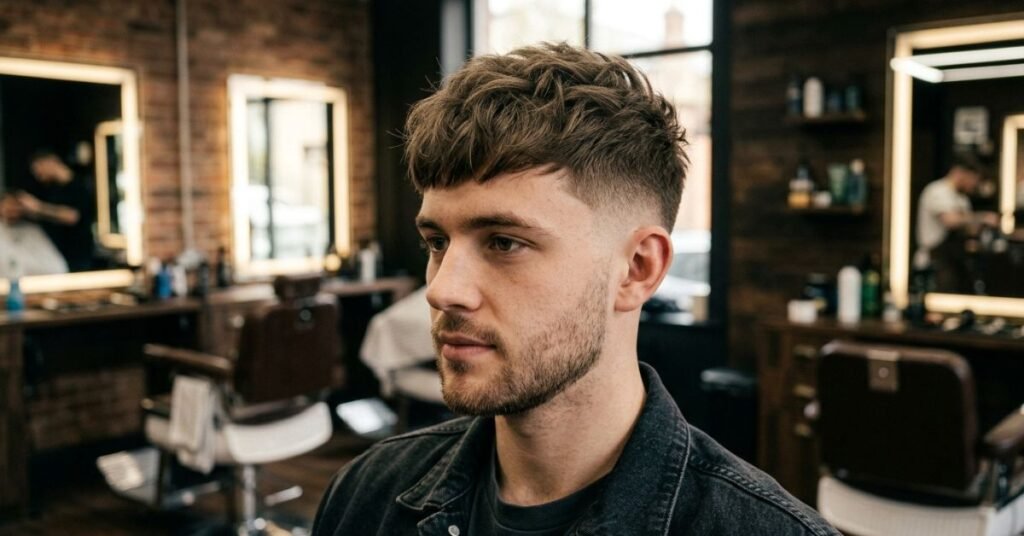
The textured crop is the easiest place to start. Choppy layers on top break up bulk. A low taper keeps the edges clean without going too short.
Why it works
Thick hair often feels heavy on the sides by day three. The taper removes that weight, and the textured top keeps the wave visible.
How to style it
- Start with damp hair.
- Work a pea-size amount of matte paste through it.
- Pinch the top sections for definition.
- Let it air-dry, then scrunch once to soften stiffness.
Ask your barber for
- 2 to 2.5 inches on top
- Point cutting for texture
- A low taper around the ears and nape
- A natural neckline
2) Wavy Caesar

The Caesar is short, forward, and forgiving. A short fringe covers the front hairline, and the waves add a broken, lived-in edge.
Why it works
It gives coverage up front without needing height. If your hairline is moving back, this cut hides it well.
How to style it
- Apply a small amount of light cream to damp hair.
- Push the hair forward.
- Tap the fringe with your fingertips to create a soft, uneven edge.
Ask your barber for
- A short fringe with a textured crop on top
- Tapered sides, not a skin fade
- Weight left near the hairline so the shape holds
3) Short Quiff with Natural Waves

A short quiff lifts the front and opens up the face. You still get a wavy, relaxed finish instead of a stiff, sculpted one.
Why it works
The wave adds natural volume, so you need very little product. It is also a good fit for round faces that benefit from extra height.
How to style it
- Spray sea salt spray on damp hair.
- Push the front up and slightly back.
- Finish with a fingertip of matte paste.
Ask your barber for
- 2 to 3 inches on top
- Tapered sides
- Light internal debulking if your hair is very thick
4) Ivy League Waves

This is the classic, office-ready option. A soft side sweep shows movement without looking messy, and it grows out cleanly.
Why it works
It looks neat in meetings and relaxed on weekends. The scissor cut also lets the waves fall naturally.
How to style it
- Apply lightweight cream or mousse to damp hair.
- Comb it into your natural part.
- Let it settle. If it puffs up, mist it with water and shape it by hand.
Ask your barber for
- A scissor cut on top
- A short taper at the temples
- Enough length to see the bend
5) Mid Fade + Wavy Top
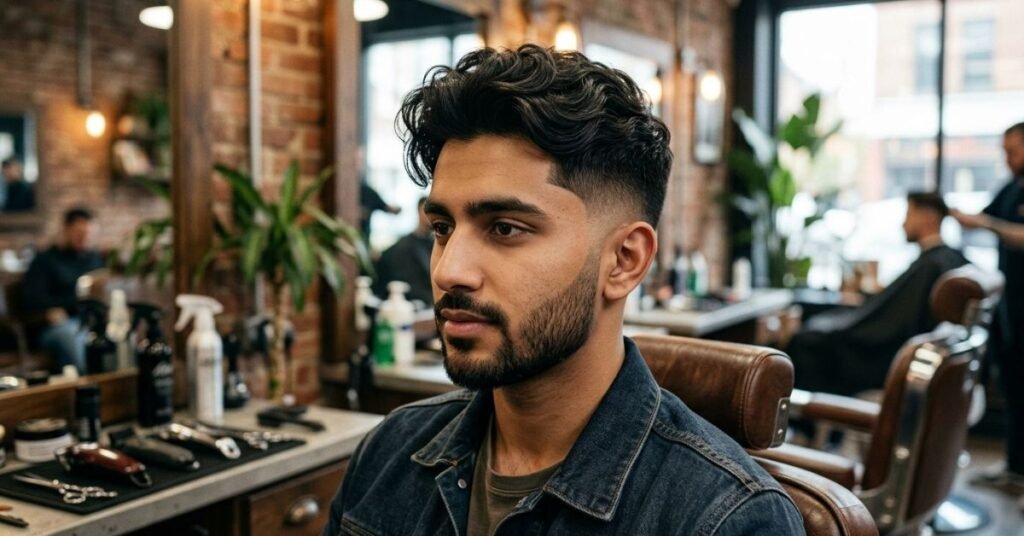
A mid fade tightens the silhouette. The contrast between clean sides and wavy hair on top makes the texture stand out.
Why it works
Fades solve the “triangle head” problem some men with thick waves get. Taking weight off the sides keeps the shape narrow and the top defined.
How to style it
- Apply salt spray or foam to damp hair.
- Air-dry to about 90%.
- Scrunch once to break up any stiff cast.
Ask your barber for
- A mid fade
- About 2 inches on top
- Point cutting for movement
- A natural neckline
Fades need more upkeep. Plan a trim every three to four weeks to keep the lines sharp.
A five-minute routine that keeps waves defined
Good waves come from a simple routine, not a shelf of products. Here is a plan that works for most short wavy cuts.
Step 1: Wash smart
Shampoo when your scalp needs it. Every two to three days is a good starting point. Thick or textured hair usually needs fewer washes than oily, straight hair. On off days, rinse and condition, keeping shampoo on the scalp and conditioner on the lengths.
Step 2: Dry gently
Pat your hair with a cotton T-shirt or microfiber towel. Rough rubbing causes frizz and breaks up the wave pattern.
Step 3: Add light product
- Sea salt spray: Adds grip and texture.
- Matte paste: Adds shape and hold.
- Curl cream: Adds softness and reduces frizz.
Start with a small amount. You can add more, but you can’t easily take it out.
Step 4: Go easy on heat
Air-dry whenever you can. If you use a diffuser, keep it on low heat or cool and stop at about 90% dry. Finish by letting the hair settle on its own.
Step 5: Keep up with trims
Book a trim every four to six weeks. Waves lose shape quickly once the sides grow out.
Quick troubleshooting
My waves disappeared after the haircut
The top is probably too short, or the ends were over-thinned. Ask for point cutting and keep 1.5 to 2.5 inches.
The sides puff out
You likely need internal debulking with scissors or a tighter taper at the temples. Ask your barber to remove weight without cutting the length on top.
My hair is frizzy
Switch to a sulfate-free shampoo and use a dime-size amount of curl cream. Don’t dry your hair completely, because over-drying is a common cause of frizz.
My hair goes flat at the crown
Apply product at the roots and mid-lengths. Heavy product on the ends weighs the wave down.
My hair feels coated or dull
You may have product buildup. Use a clarifying shampoo once every few weeks, then follow with conditioner.
What to tell your barber (copy/paste)
Walk in with a clear request. Copy this and adjust it to your style:
“Keep about 2 to 2.5 inches on top so the waves show. Use point cutting for texture, give me a low or mid taper, and keep the neckline natural. I style in under five minutes with sea salt spray and a matte paste.”
A few extra tips:
- Bring two or three reference photos from different angles.
- Mention your wave type (2A, 2B or 2C) if you know it.
- Say whether your hair is thick, fine, or in between.
- Ask how the cut will look in four weeks, not just on day one.
Try it on before you commit (HairWow)
Choosing a cut is easier when you can see it on your own face. HairWow lets you test short wavy looks on your photo in seconds. The presets include Textured Crop, Wavy Caesar, Short Quiff, Ivy League Waves, and Mid Fade + Wavy Top.
You can adjust the length, switch tapers, test a fringe, and save your favorite to show your barber. Upload a photo, play with the presets, and walk into the shop knowing what you want.
FAQs about short wavy hairstyles for men
What is the best short haircut for wavy hair?
The textured crop with a low taper suits most men. It removes side bulk and keeps the waves visible on top.
How long should wavy hair be on top?
Aim for 1.5 to 2.5 inches. That is enough length to show the wave without losing control.
Do short wavy hairstyles need a fade?
No. A taper is often enough, and a fade is optional if you want a sharper, higher-contrast look.
How often should I get a trim?
Every four to six weeks for most styles. Fades need a trim every three to four weeks.
What product is best for short wavy hair?
Sea salt spray for texture, matte paste for shape, and curl cream for softness and frizz control.
How often should I wash wavy hair?
Every two to three days is a good starting point. Adjust based on how oily your scalp gets.
Can fine wavy hair work with these cuts?
Yes. Choose lighter styles like the Wavy Caesar or Ivy League cut, and use very little product.
Should I use a diffuser?
Optional. If you do, use low or cool heat and stop at about 90% dry.
Conclusion
Short wavy hairstyles for men are about working with your hair instead of fighting it. Keep enough length on top, taper the sides, and choose the style that matches your face shape and wave type.
Start with one of the five cuts above. Use the barber script, keep your routine simple, and trim on schedule. If you’re unsure, preview the look on your photo first.

