

Meta description (127 characters): Discover 26 low taper fade middle part hairstyles for men in 2026, plus barber tips, styling steps, face shape picks, and FAQs.
A low taper fade middle part gives you a tight, tidy neckline and a centered split on top. It looks sharp in a meeting and relaxed on a Saturday. Better yet, it works on straight, wavy, and curly hair.
This guide covers 26 variations, barber-ready phrases, face shape matches, styling steps, and quick answers to common questions. Screenshot your favorite and bring it along.
What Is a Low Taper Fade Middle Part?
A low taper fade middle part is a men’s haircut with sides and nape that shorten gradually near the ears and neckline. The top stays long enough to split down the center, usually 2 to 4 inches.
What Is a Low Taper Fade?
A low taper fade starts its blend near the sideburns and the nape. Most of the side length stays intact, so the cut looks soft instead of shaved.
Barbers often call it the most versatile fade height. If you feel unsure, start low. You can always go higher next time.
Here’s the technical difference. A taper and a fade aren’t quite the same thing. A taper shortens evenly and gradually, while a fade can drop much shorter and sometimes reaches bare skin. In practice, most barbers hear “taper fade” and deliver a taper or a very low fade.
What Is a Middle Part Hairstyle?
A middle part splits your hair down the center of the scalp. The hair then falls evenly to both sides. This gives the face a symmetrical frame and puts your cheekbones and eyes on display.
Why Is the Middle Part Back in Style?
Three forces brought it back. First, social media made reference photos easy to share. Second, K-pop and streetwear fashion made soft, flowing hair feel fresh again. Third, men now favor natural-looking cuts over stiff, slicked styles.
Wavy and textured hair also falls open at the center without a fight. That makes the part feel effortless.
Benefits of a Low Taper Fade Middle Part
- Works on straight, wavy, curly, and thick hair
- Flatters most face shapes
- Grows out more gracefully than a skin fade
- Looks polished at work and casual after hours
- Removes bulk near the ears on thick hair
- Adds the look of density on thin hair
- Pairs well with beards, fringe, and curtains
- Lets you change the top length without touching the fade
Top 26 Best Low Taper Fade Middle Part Hairstyles
Each style below has its own personality. Pick one based on your hair type, schedule, and comfort level.
Classic Low Taper Fade Middle Part

Think precision. The sides stay tight and close, and the top combs into an even split. It suits weddings, interviews, and everything between.
Modern Low Taper Fade Middle Part

This one adds light layering at the crown. Finger-style it with a bit of matte product for a lived-in shape that still holds.
Textured Low Taper Fade Middle Part

Work clay through damp hair to separate the strands. The texture hides heaviness and uneven growth patterns, so it suits coarse hair well.
Messy Low Taper Fade Middle Part

Skip the comb. Spritz sea salt spray, scrunch, and let strands fall where they want. The fade keeps the chaos looking intentional.
Straight Hair Low Taper Fade Middle Part

Straight hair holds a part with little help. A pea-sized dab of cream or light pomade controls flyaways and adds a subtle shine.
Wavy Hair Low Taper Fade Middle Part

Waves give the part natural fullness. They also soften the split line, so it never looks painted on.
Curly Hair Low Taper Fade Middle Part

Ask for extra length on top. Curls shrink as they dry, and a short cut can lose its part completely. Use curl cream and a diffuser to keep definition.
Thick Hair Low Taper Fade Middle Part

The fade removes weight at the sides. Your barber may also thin the crown so the part lies flat. A matte paste keeps volume under control.
Thin Hair Low Taper Fade Middle Part

Tight sides pull the eye upward and make the top look fuller. Blow dry with a round brush and apply mousse at the roots.
Asian Low Taper Fade Middle Part

Thick, straight hair suits this version, which often features a soft fringe on each side of the part. Finish with light wax for a matte, natural look instead of a glossy one.
Blonde Low Taper Fade Middle Part
Bleaching the top creates strong contrast against a darker fade. Bleach dries hair out, so add a leave-in conditioner and book regular color touch-ups.
Layered Low Taper Fade Middle Part

Layers remove weight and help hair fall to each side. They also make blow drying quicker, since shorter pieces near the crown lift more easily.
Long Top Low Taper Fade Middle Part
Keep 3 to 5 inches on top for maximum flow. This version lets you switch between a center part, a slick back, or a half-up style.
Short Low Taper Fade Middle Part
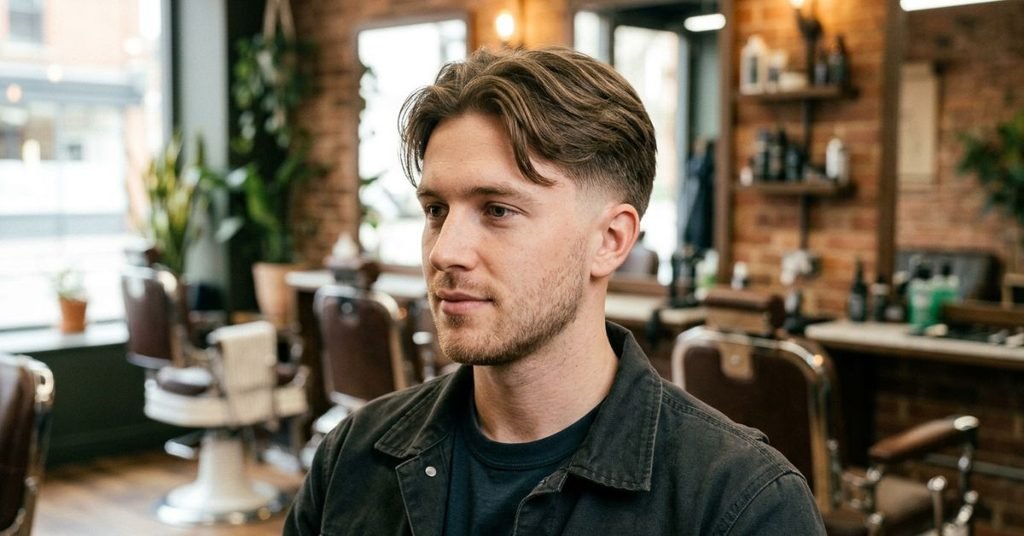
Short tops of 1 to 2 inches need almost no styling. Just make sure the hair is long enough to show a visible split.
Middle Part Taper Fade
This is the base template. It has no color, no extra texture, and no gimmicks. Many men show this version to a barber when they order the cut for the first time.
Low Taper Fade Middle Part with Fringe

A soft fringe frames the forehead and adds a youthful touch. It works best on straight or wavy hair.
Low Taper Fade Middle Part with Curtains
Curtains run longer than a fringe and sweep past the eyebrows. The look borrows from nineties fashion and still attracts younger guys today.
Low Taper Fade Middle Part with Beard

The low fade blends smoothly into the beard line. Schedule beard trims alongside fade appointments so both stay proportional.
Low Taper Fade Middle Part with Volume
Blow dry the roots upward before you set the part. The added height suits thin hair, round faces, and anyone who wants a bolder shape.
Professional Low Taper Fade Middle Part

Keep the fade conservative and the product light. This version reads as neat in client meetings and interviews.
Low Taper Fade Middle Part for Teen Boys
This is a friendly first fade. It looks current without going extreme, and it grows out well between school and sports schedules.
Natural Low Taper Fade Middle Part

Wash, air dry, and walk out. This version works best on hair that already has some wave or texture.
Low Taper Fade Middle Part with Textured Top
Texturizing powder or clay creates a piecey, dimensional finish. The texture catches light well, which is why it photographs nicely.
Clean Low Taper Fade Middle Part

Crisp lines around the hairline, ears, and neck define this one. A sharp line-up gives the whole cut an expensive look.
Casual Low Taper Fade Middle Part
Air dry, add a touch of light product, and head out. It’s the right pick for weekends and travel.
Trending Low Taper Fade Middle Part 2026

This year’s version leans soft. Picture a slightly longer top, natural texture, and a barely there fade that blends without contrast.
How to Ask Your Barber for a Low Taper Fade Middle Part
Vague requests cause most bad haircuts. Use this checklist:
- Say “low taper fade” and point to the sideburns and nape.
- Request 2 to 4 inches on top so the part shows.
- Name your hair type: straight, wavy, curly, or thick.
- Bring a reference photo.
- Ask for a soft blend with no hard line.
- Confirm the clipper guard or length at the shortest point.
Best Face Shapes
Face Shape Compatibility
| Face Shape | Best Pick | Why It Works |
|---|---|---|
| Oval | Classic or textured | Balanced proportions suit nearly everything |
| Round | Long top with volume | Adds height and elongates the face |
| Square | Textured or messy | Softens a strong jaw |
| Diamond | Part with fringe | Balances narrow forehead and chin |
| Heart | Curtains or side-swept fringe | Softens a wider forehead |
| Oblong | Short or medium top, less height | Avoids stretching the face |
Oval Face
You have the easiest job. Almost any version works, so experiment freely with fringe, curtains, or length.
Round Face
Go for height. A longer, voluminous top paired with a tight low taper creates a more structured outline. Skip wide, flared fringes.
Square Face
Soft texture balances sharp angles. A messy or textured part flatters the jawline without competing with it.
Diamond Face
A soft fringe widens the forehead and balances the cheekbones. Light texture near the temples helps too.
Heart Face
Curtains draw attention downward. A light beard adds weight near the chin and evens out the proportions.
Oblong Face
Avoid too much height at the crown. Keep the top short or medium, and add width with texture at the sides.
Best Hair Types
Straight Hair
Straight hair holds the split cleanly. Use light pomade for shine without weight.
Wavy Hair
Waves add fullness and movement. Sea salt spray enhances the pattern without stiffness.
Curly Hair
Curls bring natural volume. Leave extra length and use curl cream to fight frizz.
Thick Hair
The fade controls side bulk. Matte clay manages the top without making it heavy.
Thin Hair
Tight sides draw the eye upward. Apply volumizing products at the roots for more body.
Medium Length Hair
Medium length gives you the most options. You can add volume, texture, or a sleek comb-through depending on the day.
Pros and Cons
| Pros | Cons |
|---|---|
| Fits most hair types and face shapes | Needs a fade refresh every 2 to 4 weeks |
| Low-effort sides, flexible top | The part can look flat without technique |
| Grows out gracefully | Very fine, limp hair needs volumizing help |
| Works from office to weekend | Takes a few tries to style well |
| Pairs with beards and fringe | Humidity can affect hold |
How to Style a Low Taper Fade Middle Part
Start with damp hair. Apply product evenly, then guide the hair into place before it dries fully. Good technique matters more than a pile of product.
Best Styling Products
- Matte pomade: natural finish with moderate hold
- Texturizing clay: grip and separation
- Sea salt spray: beachy texture for wavy or curly hair
- Volumizing mousse: body for fine hair
- Light-hold gel: flyaway control without crunch
- Heat protectant: essential before blow drying
Step-by-Step Styling Guide
- Wash with a gentle shampoo and towel dry until damp.
- Rake a pea-sized amount of product through the top.
- Use the tail of a comb to draw a straight line down the center.
- Blow dry each side outward and slightly downward.
- Smooth flyaways with a fine-tooth comb.
- Finish with a light-hold spray if you need all-day control.
How to Maintain a Low Taper Fade Middle Part
Book a fade touch-up every 2 to 4 weeks. Low fades blur quickly around the ears and nape, so shorter intervals keep the line crisp. Between visits, ask your barber for a quick neckline clean-up.
Wash two or three times per week to protect natural oils. Trim the top at each visit so the part keeps its shape. If you bleach or color, sync those appointments with your fade schedule.
Low Taper Fade Middle Part vs Curtains
Curtains run longer and fall past the eyebrows. They look softer and more romantic. The low taper version stays shorter and sharper. Choose curtains for a relaxed feel and the taper for a cleaner silhouette.
Low Taper Fade Middle Part vs Side Part
A side part leans traditional and professional. A middle part feels more modern and symmetrical. If your hair has natural wave or texture, the center split usually looks easier to wear.
Low Taper Fade Middle Part vs Fluffy Hair
Fluffy hair relies on volume and has no defined split. The middle part adds structure. Pick it when you want a deliberate shape instead of an airy, undone look.
Celebrity Inspiration
Footballers and K-pop idols helped popularize the textured, slightly messy version. Actors often choose the cleaner, classic take for formal events. Creators on social media push the soft 2026 version with its subtle fade.
However, celebrity hair involves styling teams and specific hair types. Treat photos as a general shape guide. Then let your barber adjust the proportions for your face and texture.
Common Mistakes to Avoid
- Skipping fade maintenance until the sides blur
- Using too much product, which flattens the part
- Picking a version that fights your natural texture
- Forgetting to specify fade height and top length
- Forcing a part on hair that is too short
- Ignoring face shape when choosing a variation
- Over-washing with harsh shampoo
- Leaving split ends on a longer top
FAQs
What is the difference between a taper and a fade?
A taper shortens hair gradually and evenly, while a fade can go much shorter and sometimes reaches skin. Most barbers treat “taper fade” as a taper.
How long should my hair be for a middle part?
Aim for 2 to 4 inches on top. Curly hair needs extra length because curls shrink as they dry.
How often should I get a touch-up?
Every 2 to 4 weeks keeps the neckline and sideburns sharp. Go closer to 2 weeks if you want maximum crispness.
Does a middle part work with a receding hairline?
Yes, if you keep the top longer and add a soft fringe to cover the temples. A flat, tight part tends to emphasize recession.
Can I wear a middle part with a cowlick?
Often, yes. Ask for slightly more length and blow dry the area in the opposite direction of the growth before you set the split.
Conclusion
The low taper fade middle part earns its spot because it adapts. Change the top length, add texture, or try a fringe, and the cut still feels like you. Pair a clear barber request with a simple styling routine and a touch-up every few weeks. The payoff is a haircut that looks sharp and takes little effort.
Pick two or three styles from this list, save the photos, and book your appointment.

