

Picking between Low fade vs mid fade vs high fade is mostly a question of how much contrast you want. A low fade is soft and clean. A mid fade is balanced and works for almost everyone. A high fade is sharp and bold.
The names only describe where the blend starts on the sides of your head. Face shape, hair texture, hairline, beard and how often you visit the barber decide which one looks best on you.
This guide explains each option in plain language. You will also get barber scripts, maintenance timelines and a few mistakes worth avoiding.
Compare Low fade vs mid fade vs high fade directions before the barber
A fade is a haircut technique where hair gets gradually shorter from the top of the sides down to the neckline. Low fade vs mid fade vs high fade describe how far up the head that change begins.
Think of it as three dials, not one:
- Height: low, mid or high
- Bottom length: skin, shadow or a guard number
- Shape: straight, drop, burst or temple
Most people only name the first dial. Barbers hear the other two as blanks they have to fill in, and that is where mismatched results start.
Try a low fade first
If this is your first fade, begin with a low one. It keeps more of your natural shape and grows out gently. A barber can always raise the blend during the appointment. Lowering it again is not possible that day.
A virtual try-on tool such as HairWow Try-On can show you the effect on your own photo before you commit.
Key takeaways
- A low fade starts near the ear and neckline. It is subtle, polished and easy to grow out.
- A mid fade starts around the temple. It is the most versatile option.
- A high fade starts above the temple. It gives the strongest contrast and needs the most upkeep.
- Long faces usually suit low or mid fades. Round and square faces often suit mid or high fades.
- Curly and coily hair needs the top shape planned first.
- Fade height, bottom length and fade shape are three separate choices.
- If you wear a beard, plan the beard blend and the fade together.
- Bring a front photo and a side photo to your barber.
Quick comparison
| Feature | Low fade | Mid fade | High fade |
|---|---|---|---|
| Starts at | Just above the ear and neckline | Around the temple | Above the temple |
| Look | Soft, clean, natural | Balanced, defined | Sharp, dramatic |
| Best for | First fades, office dress codes | Most faces and styles | Bold short cuts |
| Touch-up | Every 2 to 4 weeks | Every 2 to 3 weeks | Every 1 to 2 weeks |
| Grow-out | Gentle | Noticeable | Obvious quickly |
A simple way to remember the Low fade vs mid fade vs high fade choice:
- Cleaner, not different: low fade
- Fresh, but wearable: mid fade
- Sharp and obvious: high fade
Barbers and grooming sites define the exact starting points slightly differently. One barber’s mid fade is another’s high-mid fade. That is why a side-view photo matters more than the name.
What is a low fade?
A low fade begins low on the head, around the ear, sideburn and back neckline. Most of the side hair stays, so the cut looks full and natural.
Choose a low fade if you:
- are getting your first fade
- work in a conservative office or school
- like your current top but want cleaner edges
- have a long or narrow face
- have curls, waves or a beard and want an easy grow-out
It pairs well with a side part, textured crop, Ivy League cut and short waves. It does not have to go down to skin. Many people ask for a number 1 or 1.5 at the shortest point for a softer finish.
The trade-off is subtlety. If you want people to notice a big change, a low fade can feel too tame. It can also look heavy if the top and upper sides are left bulky.
What is a mid fade?
A mid fade starts around the temple, halfway up the side of the head. It removes more weight than a low fade without going to the extreme of a high one.
Choose a mid fade if you:
- want a modern cut that still looks professional
- want your top texture to stand out
- have a round, oval or square face
- like crops, quiffs, Caesars or comb overs
- want the cut to look good after a week of growth
It works on straight, wavy, curly and coily hair, which is why many barbers treat it as the default.
The risk is vocabulary. Some barbers keep a mid fade under the temple. Others push it close to high. Say clearly whether the blend should sit at or below temple height.
Compare a balanced mid-fade shape
A mid fade combined with a side part gives a polished everyday look. A mid fade with a textured crop feels more casual. Compare both on your own photo before you decide on the top.
What is a high fade?
A high fade starts above the temple and removes most of the side hair. The top looks more separated from the sides, which creates a narrow, athletic outline.
Choose a high fade if you:
- want clear contrast
- like buzz cuts, hard parts, high-and-tight styles or short crops
- have thick hair that gets wide on the sides
- do not mind frequent touch-ups
A high fade works best when the top has a clear purpose, such as a textured crop, short curls or a sharp part.
The downsides are commitment and exposure. Scalp shows sooner, grow-out is obvious within days, and uneven temples or thinning crown hair become more visible. A tall top on a long face can also stretch the look further.
Try a higher-contrast fade
If you are torn between mid and high, preview the higher option first. If it feels too severe on screen, a mid fade is probably your answer.
Which fade should you choose?
Start with your real goal, not the haircut name.
| Your goal | Best choice | Why |
|---|---|---|
| Cleaner version of my current cut | Low fade | Tidies edges without changing the shape |
| Fresh, modern look | Mid fade | Visible contrast that stays wearable |
| Very tight sides | High fade | Removes the most bulk |
| Conservative workplace | Low or soft mid fade | Looks groomed, not aggressive |
| Wide sides that make my head look round | Mid or high fade | Narrows the profile |
| Long face | Low or low-mid fade | Keeps side balance |
| Less time in the barber chair | Low fade | Longest gap between visits |
| Beard | Low or mid fade | More room to blend the sideburn |
When in doubt, go lower. It is the safer first step.
Face shape guide
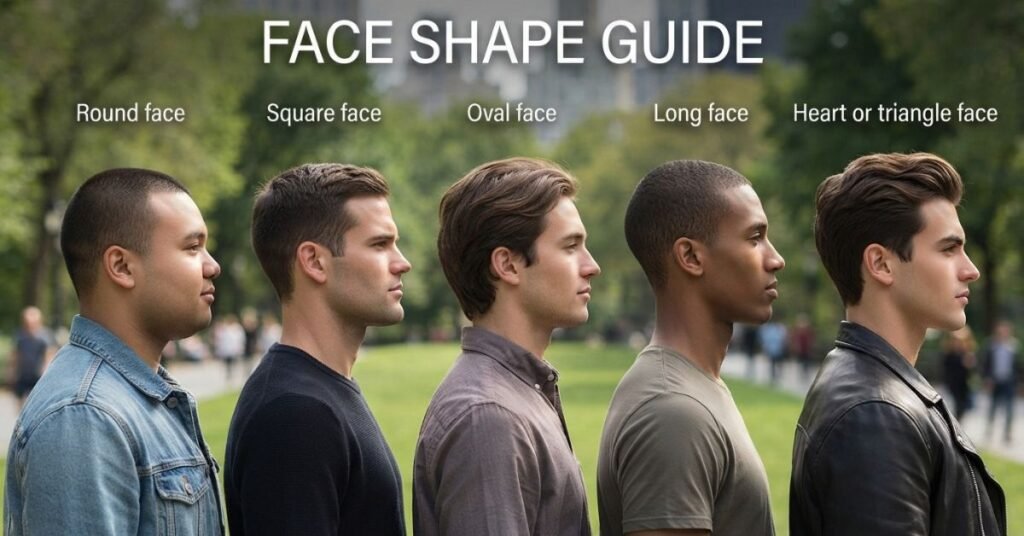
Fade height changes the outline of your face. The same cut can sharpen one face and over-narrow another.
Round face
A mid fade with controlled top height tightens the sides and adds a little vertical shape. Some barbers also recommend a high fade for round faces because it removes side width. The key is not to leave the sides bulky.
Square face
Square faces already have a strong jawline, so most heights work. A mid fade is the safest. A high fade looks sharp if the top is not too tall. A low fade gives a classic, professional finish.
Oval face
Oval faces are flexible. Choose a low fade for softness, a mid fade for balance or a high fade for contrast. Texture and maintenance should guide the choice.
Long face
Be careful with very high sides and tall tops, because both can make the face look longer. A low or low-mid fade keeps visual width at the sides.
Heart or triangle face
If your forehead is wider than your jaw, avoid making the temple area too tight. A low or mid fade with a textured fringe usually balances the proportions better than a very high fade.
Hair type guide
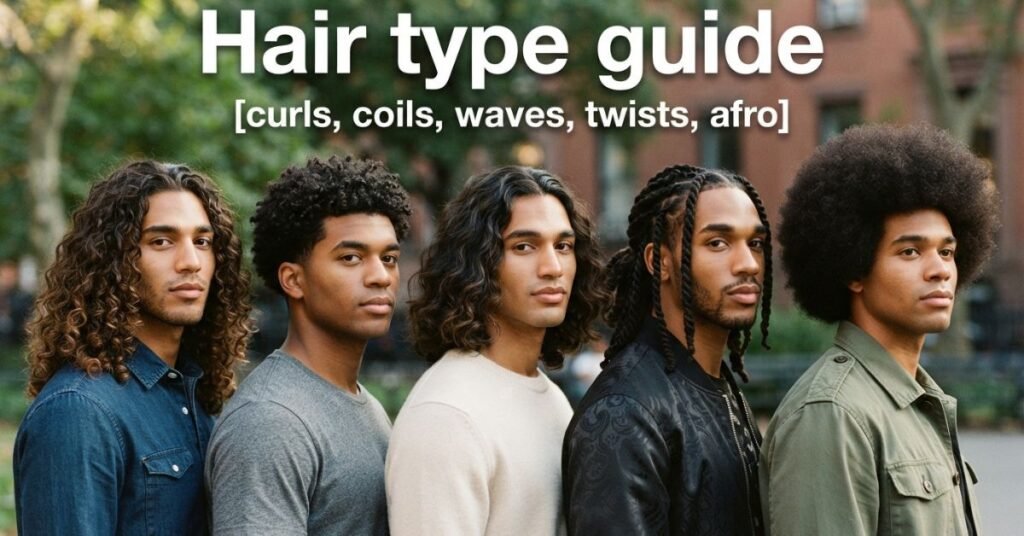
Texture changes how a fade looks after washing, styling and a week of growth.
| Hair type | Good choices | Watch out for |
|---|---|---|
| Straight | Low, mid or hard part fade | A high fade can look severe with a flat top |
| Wavy | Mid, low or textured crop fade | Heavy product can weigh the top down |
| Curly | Low, drop or mid fade | Shrinkage makes the top look shorter after washing |
| Coily | Temple, low or drop fade | Cutting too high can remove support for the top |
| Fine | Low or soft mid fade | Skin fades can show scalp contrast |
| Thick | Mid or high fade | Blend well so the top does not look disconnected |
For curly and coily hair, decide the top shape first. Do you want curls, coils, waves, twists or an afro shape? Then pick the fade height that supports it.
For fine hair, a softer low fade usually looks cleaner than a skin fade.
Try a curl-friendly fade
A drop fade curves lower behind the ear and follows the shape of the skull. It cleans up the sides while keeping top volume, so it is a popular choice for curls.
Taper vs fade: where the confusion starts
A taper cleans the sideburns, ears and neckline while leaving most of the side length intact. A fade removes more hair and creates a stronger gradient.
Quick guide:
- Taper: a tidy edge-up
- Low fade: a subtle visible transition
- Mid fade: a clear, modern blend
- High fade: very tight sides
Now the part most guides skip: height is only one part of the name. Here are the other two.
Bottom length (how short it ends):
- Skin or bald fade: goes to bare skin, usually finished with a foil shaver
- Zero fade: clippers with no guard, leaving a faint stubble
- Shadow fade: stops just short of skin, usually around a number 1 to 2 guard
Shape (how the line travels):
- Drop fade: the line curves down behind the ear
- Burst fade: a semicircle that radiates around the ear, often with a longer back
- Temple fade: focuses on a clean temple area
One haircut can be a mid fade, a skin fade and a drop fade at the same time. Each word answers a different question.
What to tell your barber
“Give me a fade” leaves too much open. Tell your barber the height, the shortest guard, the top length and how you want the neckline finished.
A quick guard reference: a number 1 is about 1/8 inch, a number 2 is about 1/4 inch and a number 3 is about 3/8 inch. A number 1 all over is a buzz cut, not a fade.
Low fade barber script
“I would like a low fade. Keep it low around the ears and neckline, do not take it too high, and leave enough weight above so it looks natural.”
- Softer: “Do not go to skin. Keep the shortest part around a 1 or 1.5.”
- Sharper: “Taking the bottom to skin is fine, but keep the blend low.”
Mid fade barber script
“I would like a mid fade that sits around the temple, not a high fade. Keep the blend smooth and leave the top long enough to style with texture.”
- Professional version: “Keep it neat and not too aggressive above the temple.”
High fade barber script
“I would like a high fade with tight sides and clear contrast. Keep the top shape intentional and do not leave a ridge where the fade meets the longer hair.”
- Bolder version: “Skin on the sides is fine, with a smooth blend into the top.”
Beard blend script
“Blend the sideburn into the beard so the haircut and beard look connected. Keep the cheek line and neckline clean.”
Maintenance and grow-out
Shorter sides and higher contrast mean faster visible growth.
| Fade | Looks sharpest for | Typical refresh | Grow-out feel |
|---|---|---|---|
| Low fade | 1 to 2 weeks | 2 to 4 weeks | Soft and easy |
| Mid fade | 1 to 2 weeks | 2 to 3 weeks | Noticeable but manageable |
| High fade | 5 to 10 days | 1 to 2 weeks | Obvious quickly |
These are typical ranges. Fast-growing or coarse hair may need visits sooner.
Practical tips:
- Book your cut 1 to 3 days before a wedding, interview or photo shoot.
- Use light cream or paste on a low fade.
- Use a bit more product on a mid fade to give the top shape.
- Keep the top neat on a high fade, because short sides leave uneven styling nowhere to hide.
- Skin and zero fades show growth first, while shadow and low fades hold their shape longest.
Skin and shaving cautions
Very close cuts can irritate sensitive skin. Razor bumps and ingrown hairs are more likely when short, curly hair grows back into the skin, especially around the neck and beard line.
Smart rules:
- Skip a skin fade if your neck is already irritated.
- Tell your barber if you get razor bumps, and ask for a slightly longer shortest guard.
- Avoid repeated razor passes over the same spot.
- Avoid harsh aftershave and heavy fragrance on freshly cut skin.
- Keep hats, helmets and collars clean.
- If skin burns, bleeds or forms painful bumps, pause tight fades and speak with a dermatologist.
The American Academy of Dermatology publishes patient guidance on shaving and razor bump prevention, and those tips apply to close fades too.
How to preview the fade before you cut
Model photos hide your hairline, head shape, beard density and glasses. Previewing on your own face removes much of the guesswork.
- Upload a clear, front-facing photo.
- Try a low fade or low taper first.
- Compare a mid fade next.
- Test a high fade only if the mid fade feels too subtle.
- Save your favorite and bring it to the barber with a side-view reference.
HairWow Try-On is one tool that lets you do this.
Preview a temple fade shape
A temple fade tidies the area around the temples and keeps natural volume above it. Check how it changes your side profile before you ask for it.
Common mistakes
Mistake 1: Asking for a high fade when you wanted a mid fade
Front-view photos hide the true height of the blend. Always show a side view.
Mistake 2: Ignoring the top length
Fade height and top length work together. A high fade with a very tall top looks dramatic. A low fade with a heavy top can look unfinished. Decide both before the clippers come out.
Mistake 3: Choosing skin fade by default
Skin fades are crisp, but not automatically better. A number 1 or 1.5 at the bottom is easier to grow out and gentler on sensitive skin.
Mistake 4: Not planning the beard
A beard looks best when the sideburn connects smoothly to the fade. Ask for the blend as one plan, not two separate steps.
Mistake 5: Using the wrong reference photo
Different hair density, hairlines and head shapes change the result. Use photos for direction, then adapt the details to your own features.
FAQ
Which is better, low fade or mid fade?
Choose a low fade for a softer, professional look and easier grow-out. Choose a mid fade for more visible contrast that is still wearable.
Is a high fade too aggressive?
Not necessarily, but it is the boldest of the three. It works best if you like sharp contrast and can visit the barber every 1 to 2 weeks.
What fade is best for a round face?
A mid fade usually works best because it tightens the sides without going extreme. Keep the top controlled so the cut stays balanced.
What fade is best for a long face?
A low or low-mid fade is safer. It keeps width at the sides and avoids stretching the face.
What should I ask for if I do not want skin showing?
Ask for a low or mid fade with a shadow finish, such as a number 1 or 1.5 at the shortest point. Say clearly that you do not want a skin fade.
How often should I get a fade touched up?
Low fades need a refresh every 2 to 4 weeks, mid fades every 2 to 3 weeks and high fades every 1 to 2 weeks.
Is a taper the same as a low fade?
No. A taper mainly cleans the sideburns, ears and neckline, while a low fade creates a more visible gradient. Use photos to avoid confusion.
Can curly hair get a high fade?
Yes, but plan the top shape first because a high fade removes side support. A low, drop or temple fade grows out more softly.
Summary
Choose a low fade for a clean, soft and safe result. Choose a mid fade for the most balanced everyday cut. Choose a high fade for sharp contrast, if you accept the extra upkeep.
The name matters less than the details: where the blend starts, how short the bottom goes, how long the top stays and how the beard connects. Preview the cut on your own face, then bring a front and side reference to your barber

