

The low taper fade with long hair is a stylish, versatile haircut for men who want to keep their length while maintaining clean, sharp sides. This modern hairstyle combines longer hair on top with a subtle fade around the ears and neckline, creating a balanced appearance that works for casual outings, professional settings, and special occasions.
Whether you have straight, wavy, curly, or thick hair, a low taper fade offers plenty of styling options. You can wear your hair loose, slicked back, parted in the middle, braided, or tied into a bun.
In this guide, you will discover the best low taper fade with long hair styles for 2026, along with practical styling advice, maintenance tips, and recommendations for choosing a look that suits your hair type.
What Is a Low Taper Fade With Long Hair?
A low taper fade with long hair is a haircut that keeps the hair longer on top while gradually shortening the hair around the ears and neckline. Unlike a high fade, which removes more hair from the sides, a low taper creates a subtle transition near the bottom of the head.
This haircut is ideal for men who want a neat appearance without sacrificing the natural movement of longer hair. The top can be styled in different ways, including a middle part, slick back, textured flow, or messy finish.
Another advantage is its flexibility. You can maintain a natural, relaxed look or create a polished style with the right grooming products. The low taper also helps the haircut maintain a defined shape as the longer hair grows.
Why Choose a Low Taper Fade With Long Hair?
A low taper fade with long hair combines the freedom of longer hairstyles with the clean finish of a traditional barber cut. It reduces bulk around the ears and neckline while allowing the top to remain full, textured, and expressive.
The style also works with different face shapes and hair textures. Straight hair can look smooth and refined, wavy hair gains natural movement, and curly hair maintains its volume without appearing overly bulky around the sides.
Another benefit is that you do not need to cut the top frequently to maintain the overall look. Regular taper touch-ups can keep the sides clean while allowing your hair to continue growing.
20 Low Taper Fade With Long Hair Styles
1. Classic Low Taper Fade With Long Hair
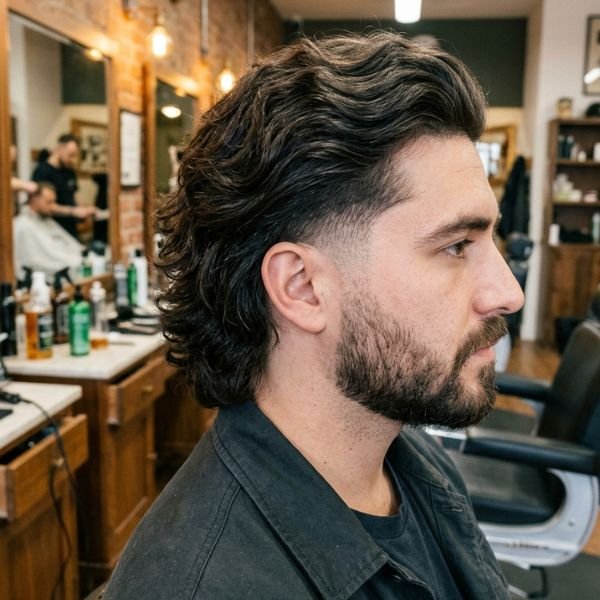
The classic low taper fade keeps the top long and natural while the sides gradually become shorter around the ears and neckline. This timeless option offers a balanced appearance without creating an extreme contrast.
It is easy to personalize with a natural side part, brushed-back hair, or loose texture. The style also grows out relatively well when the taper is blended carefully.
Styling tip: Apply a small amount of lightweight styling cream for natural control.
Best for: Straight, wavy, and medium-thick hair.
2. Straight Low Taper Fade With Long Hair
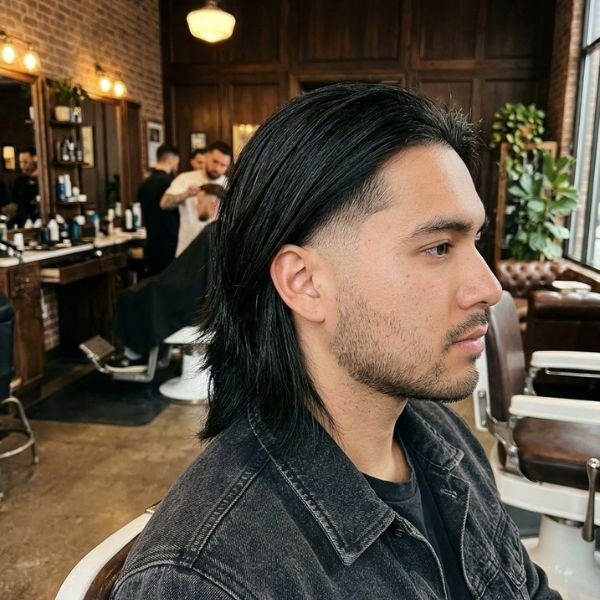
Straight long hair looks clean and sophisticated when paired with a low taper fade. The longer strands can fall naturally around the forehead or sides, while the tapered edges keep the haircut looking intentional.
This style is particularly useful for men who prefer a simple grooming routine. A small amount of serum can help manage frizz and add shine without making the hair appear greasy.
Styling tip: Use a lightweight smoothing serum and a wide-tooth comb.
Best for: Straight, fine, and medium-density hair.
3. Low Taper Fade With Wavy Long Hair
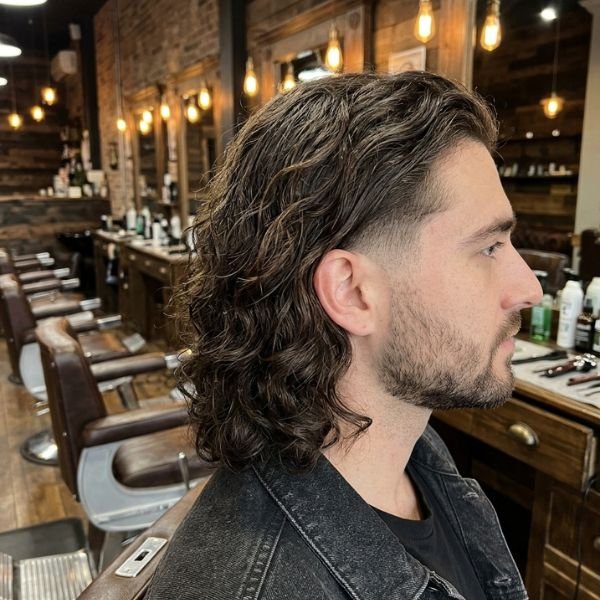
Wavy long hair adds movement and dimension to a low taper fade. The natural waves create volume on top, while the shorter sides provide contrast and prevent the overall shape from appearing too heavy.
You can wear the waves loosely, brush them backward, or create a relaxed middle part. This makes the haircut suitable for men who want a modern appearance without overly structured styling.
Styling tip: Apply sea salt spray to slightly damp hair to enhance natural texture.
Best for: Wavy and thick hair.
4. Low Taper Fade With Curly Long Hair
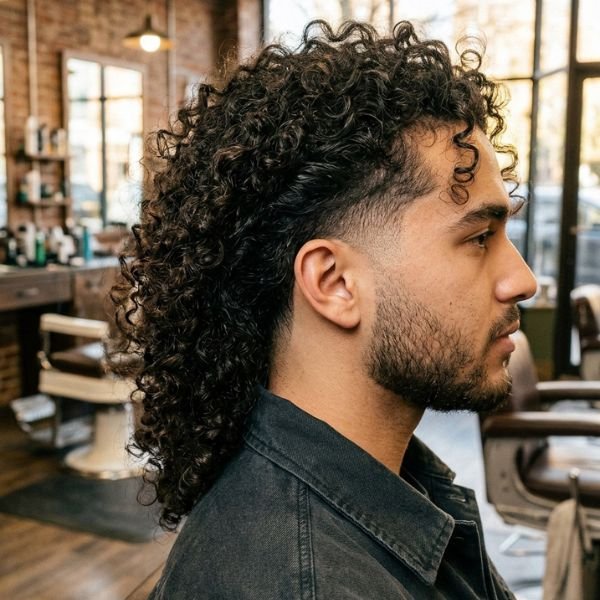
Curly long hair pairs well with a low taper fade because the curls remain full on top while the sides and neckline look cleaner. The result highlights natural curl patterns without removing too much length.
A curl-friendly routine helps maintain definition and reduce frizz. Avoid excessive brushing when the hair is dry, as this can disturb the curl pattern and increase unwanted volume.
Styling tip: Use curl cream and gently shape the curls with your fingers.
Best for: Curly, coily, and thick hair.
5. Low Taper Fade With Slicked-Back Long Hair
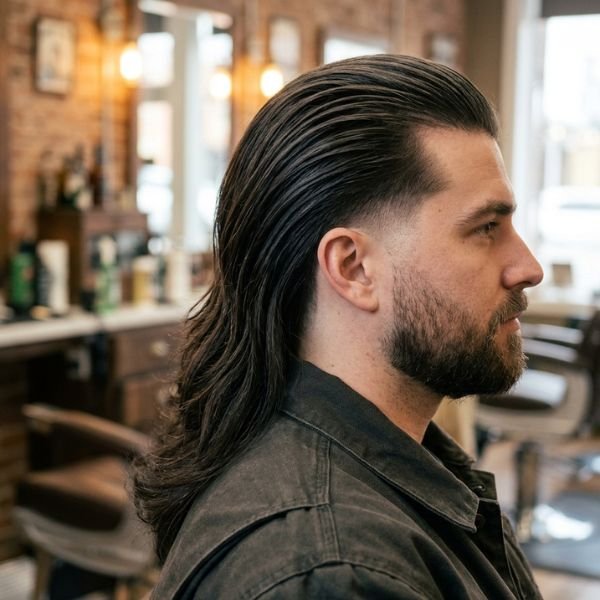
The slicked-back style creates a polished, mature appearance. Longer hair is brushed away from the forehead, while the low taper keeps the sides and neckline neat.
This haircut can work for professional environments, evening events, and occasions where a more refined appearance is preferred. You can choose a glossy finish or a more natural look depending on your styling product.
Styling tip: Apply a medium-hold pomade or styling cream and comb the hair backward.
Best for: Straight and slightly wavy hair.
6. Low Taper Fade With a Middle Part
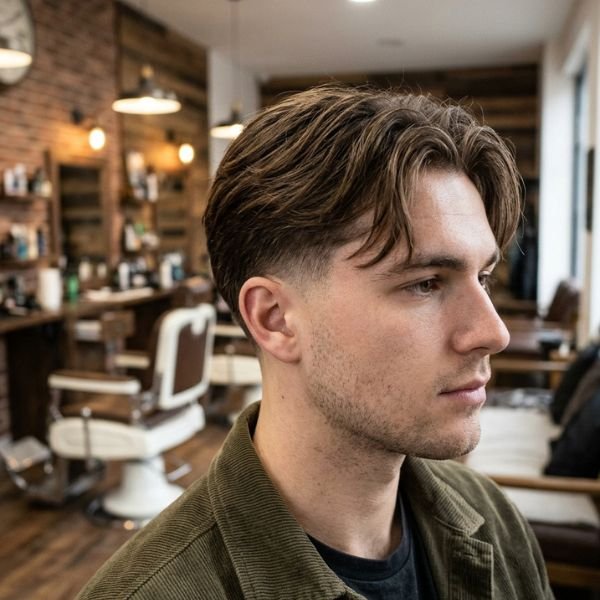
A middle part gives long hair a balanced, contemporary appearance. The hair falls naturally on either side of the face, while the low taper adds a clean finish around the ears and neckline.
This style can create a relaxed, curtain-like effect and works particularly well when the top has enough length to fall naturally. Layers can make the hair easier to manage and add movement.
Styling tip: Create the part while the hair is slightly damp, then allow it to dry naturally or use a blow dryer.
Best for: Straight, wavy, and medium-length-to-long hair.
7. Low Taper Fade With Messy Long Hair
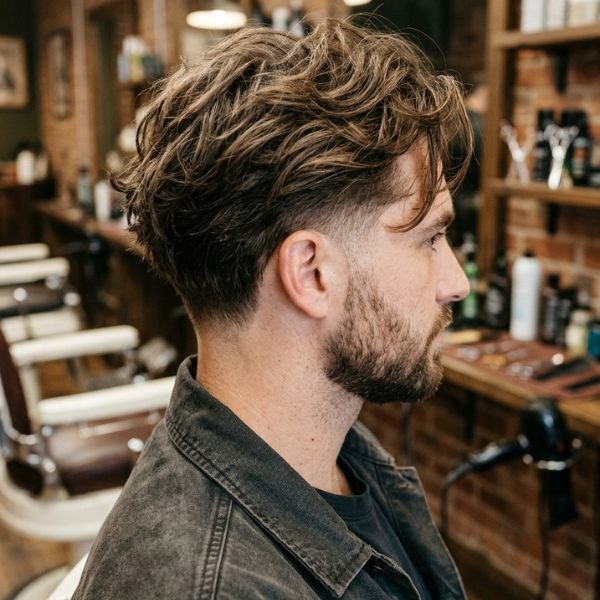
The messy long-hair style is ideal for men who prefer a casual, effortless appearance. The top remains loose and textured rather than perfectly arranged, while the taper provides structure around the sides.
This haircut works especially well when the hair has natural waves or thickness. The goal is to create controlled texture without making the hairstyle look overly styled.
Styling tip: Use a small amount of texture powder or matte cream.
Best for: Wavy, thick, and textured hair.
8. Low Taper Fade With Layered Long Hair
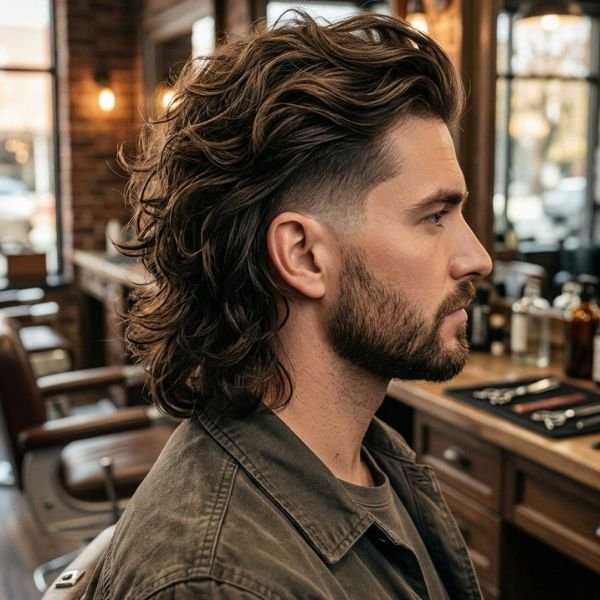
Layers help remove excess weight from long hair and create natural movement. Combined with a low taper fade, they give the hairstyle a lighter appearance while maintaining clean edges.
This option is especially helpful for men with thick hair who want to avoid a heavy or triangular shape. Subtle layers can also improve the way the hair falls around the face.
Styling tip: Apply lightweight styling cream to define the layers without weighing them down.
Best for: Thick, straight, and wavy hair.
9. Low Taper Fade With Long Textured Hair
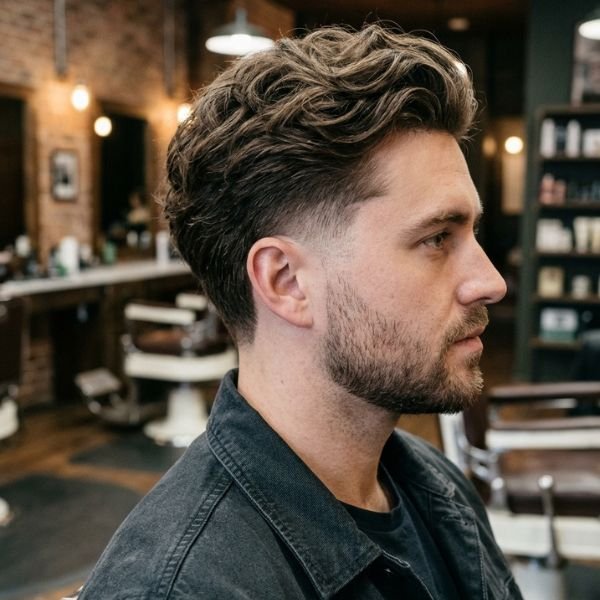
A textured top creates volume and separation between individual strands. The low taper contrasts with the fuller top, making the haircut look modern without requiring an aggressive fade.
You can style the hair forward, backward, or slightly to one side. A matte product helps preserve a natural finish rather than making the hair appear stiff or excessively shiny.
Styling tip: Work a small amount of matte clay through dry hair.
Best for: Thick, wavy, and naturally textured hair.
10. Low Taper Fade With a Long Fringe
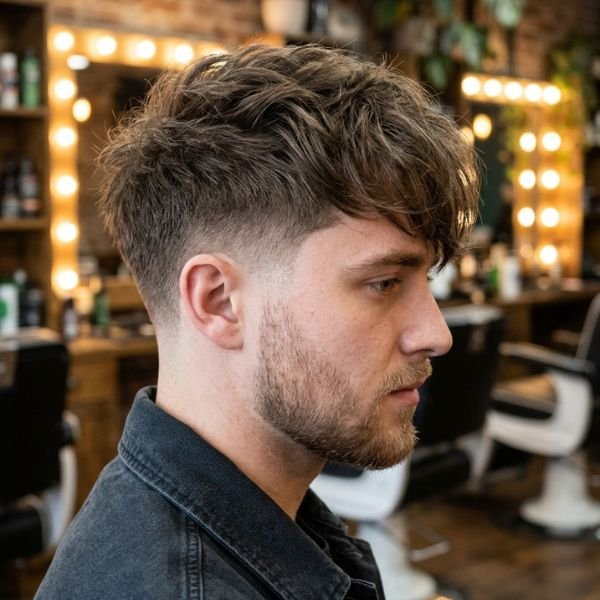
A long fringe brings attention to the front of the haircut. The hair falls toward the forehead, creating a face-framing effect while the low taper keeps the sides tidy.
The fringe can be worn straight, swept to one side, or styled with a slightly messy texture. Its length and shape can be adjusted to complement your forehead and overall facial proportions.
Styling tip: Use a lightweight cream to control the fringe without flattening it.
Best for: Straight and medium-textured hair.
11. Low Taper Fade With a Long-Hair Blowout
A blowout adds lift and volume to the top. The hair is dried upward or backward to create a fuller shape, while the low taper keeps the sides close and defined.
This bold hairstyle is particularly effective for men with naturally thick hair. It may require more styling time than a natural-flow haircut, but it offers a noticeable, modern finish.
Styling tip: Apply a small amount of mousse before blow-drying and finish with a light-hold product.
Best for: Thick, wavy, and high-volume hair.
12. Low Taper Fade With Long Hair and a Beard
Combining long hair with a beard creates a balanced, masculine appearance. The longer top provides volume, while the low taper and neatly shaped beard add definition around the face.
The beard can be short and trimmed or fuller, depending on your preferred look. Keeping the neckline and beard edges clean helps the overall style appear intentional rather than unkempt.
Styling tip: Use beard oil and trim stray hairs regularly.
Best for: Men with medium-to-thick hair and a beard.
13. Low Taper Fade With Long Hair Braids
Braids offer a practical way to manage long hair while adding visual detail. The top can feature individual braids, multiple rows, or other patterns, while the low taper creates a neat transition around the ears and neckline.
The specific braid pattern depends on your hair length, texture, and preferred maintenance routine. Avoid excessive tension, particularly around the hairline, to reduce unnecessary pulling.
Styling tip: Keep the scalp clean and moisturized, and avoid braiding too tightly.
Best for: Textured, coily, and sufficiently long hair.
14. Low Taper Fade With Long Twists
Long twists add definition and texture to the top of a low taper fade. They can be styled loosely for a relaxed appearance or arranged more neatly for a structured finish.
The taper creates contrast without removing the visual impact of the twists. Depending on your hair texture, you can choose different twist sizes and lengths to personalize the style.
Styling tip: Use a suitable twisting cream and maintain a clean, moisturized scalp.
Best for: Curly, coily, and textured hair.
15. Low Taper Fade With Long Dreadlocks
Long dreadlocks create a distinctive hairstyle with plenty of texture and movement. A low taper cleans up the area around the ears and neckline while allowing the locs to remain the main feature.
This combination works with different loc lengths and arrangements. Regular scalp care and appropriate maintenance are important for keeping both the locs and tapered areas looking neat.
Styling tip: Follow a consistent scalp-care routine and avoid excessive product buildup.
Best for: Coily and textured hair with established or developing locs.
16. Low Taper Fade With a Long Ponytail
A ponytail is a convenient way to keep long hair away from the face. The hair is pulled backward and secured, while the low taper keeps the sides and neckline looking clean.
You can wear the ponytail high, low, or near the back of the head. This style works well for everyday activities and can be adjusted to look more polished for formal occasions.
Styling tip: Use a soft hair tie and avoid pulling the hair too tightly.
Best for: Straight and wavy hair with sufficient length.
17. Low Taper Fade With a Man Bun
The man bun combines the practicality of tied-back hair with the sharp finish of a taper. The top is gathered into a bun, leaving the sides and neckline clean and defined.
Depending on your hair length, the bun can sit high, low, or toward the back of the head. A loose bun creates a relaxed appearance, while a more controlled shape looks polished.
Styling tip: Secure the bun comfortably and avoid hairstyles that place constant tension on the roots.
Best for: Straight, wavy, and thick hair.
18. Low Taper Fade With Straight Long Flow
Long straight flow emphasizes natural length and movement. The hair is allowed to fall or sweep backward, creating a relaxed silhouette that contrasts with the clean taper.
This is a good choice if you want to maintain a longer hairstyle without making it look unstructured. Light layering can help the hair move naturally rather than falling heavily against the head.
Styling tip: Apply a small amount of serum to the mid-lengths and ends.
Best for: Straight and fine-to-medium hair.
19. Low Taper Fade With Wavy Long Flow
Wavy long flow uses natural waves to create fullness and movement. The longer top can fall backward or around the sides, while the low taper keeps the edges neat.
This haircut offers a relaxed, modern look without requiring perfectly arranged strands. It is especially attractive when the natural wave pattern is allowed to remain visible.
Styling tip: Use a lightweight curl-enhancing cream or sea salt spray.
Best for: Wavy and thick hair.
20. Low Taper Fade With Soft Long Hair
The soft long-hair variation focuses on natural texture, gentle movement, and minimal styling. The top remains loose and lightweight, while the taper creates a clean outline around the ears and neckline.
This is a practical option for men who do not want to spend much time styling their hair every morning. The result can look casual and understated while still appearing well-groomed.
Styling tip: Use a light styling cream and let the hair fall naturally.
Best for: Most hair types, depending on length and density.
Pros and Cons of a Low Taper Fade With Long Hair
A low taper fade offers several advantages, but it also requires some maintenance. Understanding both sides can help you decide whether the haircut fits your lifestyle.
Pros
- Keeps the sides and neckline clean without removing much length from the top.
- Offers numerous styling options, from a middle part to braids and buns.
- Works with straight, wavy, curly, and textured hair.
- Can suit casual outfits and formal occasions.
- Allows you to grow the top while maintaining a defined shape.
Cons
- Long hair requires regular washing, conditioning, and detangling.
- Thick or very long hair may need additional styling time.
- The taper requires periodic trims to maintain its shape.
- Fine hair may need careful styling to avoid a flat appearance.
- Certain tied or braided styles can cause tension if worn too tightly.
How to Style a Low Taper Fade With Long Hair
Start with clean hair and gently towel-dry it until it is slightly damp. Choose a styling product based on your desired finish. Styling cream works well for a natural look, mousse can add volume, and pomade can provide control for slicked-back hairstyles.
Use a comb to create a middle part or direct the hair backward. If you prefer a messy or textured appearance, use your fingers to separate the strands. A blow dryer can help build volume, but use moderate heat and avoid excessive drying.
The most important principle is to work with your natural hair texture. Using too much product can make long hair look heavy or greasy, so begin with a small amount and add more only when necessary.
Best Products for Long Hair With a Low Taper
Choosing suitable hair products can make your haircut easier to maintain. The best option depends on your hair type, styling goals, and preferred finish.
Pomade: Useful for slicked-back hairstyles that require control and, depending on the formula, a shiny finish.
Matte clay or texture powder: Suitable for messy hairstyles and textured tops that need volume and separation.
Sea salt spray: Helps enhance natural waves and creates a relaxed, textured appearance.
Styling cream: Provides light control while allowing the hair to move naturally.
Hair serum: Helps smooth straight hair, reduce the appearance of frizz, and add shine to the mid-lengths and ends.
Curl cream: Helps define curls and maintain moisture without requiring a stiff finish.
You do not need every product listed above. Start with one or two products that suit your hair type and the style you want to achieve.
Maintenance Tips for a Low Taper Fade With Long Hair
Maintaining a low taper fade requires attention to both the short sides and the longer top. Many men find that a barber visit every two to four weeks helps preserve a sharp taper, although the ideal schedule depends on hair growth and personal preference.
Wash your hair according to your scalp’s needs and use conditioner to keep the longer strands manageable. Detangle gently, starting at the ends, and avoid rough towel drying that can contribute to frizz and breakage.
Trim damaged ends when necessary, especially if you are growing your hair longer. If you wear braids, twists, locs, or a man bun, pay attention to scalp comfort and avoid excessive tension.
A consistent routine helps the haircut look intentional even as the top continues to grow.
Low Taper Fade With Long Hair vs. Other Tapers
The main difference between low, mid, and high tapers is where the shorter transition begins.
A low taper fade stays close to the ears and neckline. It preserves more of the natural shape around the sides and works well when you want the long top to remain the main feature.
A mid taper fade starts higher and creates a more noticeable contrast between the top and sides. It can be a good option if you want a sharper, more defined appearance.
A high taper fade begins higher on the head and creates a bolder finish. Depending on the haircut, it may make the sides appear more dramatically separated from the longer hair.
If your priority is maintaining length and natural movement, a low taper is a versatile starting point.
How to Ask Your Barber for a Low Taper Fade With Long Hair
Tell your barber that you want to keep the top long and have the sides and neckline tapered low. Explain how much length you want to preserve and whether you prefer a subtle, natural blend or a more defined finish.
It also helps to describe your preferred top style. You might want a middle part, slick back, messy texture, fringe, natural flow, braids, or a tied-back look. These details help the barber shape the sides to complement your intended hairstyle.
If possible, bring a reference photo showing the desired front, side, and back views. Ask the barber to blend the taper smoothly around the ears and neckline without cutting away more length than necessary.
Clear communication makes it easier to achieve a haircut that suits your hair texture and daily routine.
Frequently Asked Questions
Is a low taper fade good for long hair?
Yes. A low taper fade works well with long hair because it keeps the sides and neckline neat while preserving the length and movement on top. It also allows you to experiment with different styles without changing the basic haircut.
How long should the hair be for a low taper fade?
There is no single required length. Your hair simply needs enough length to achieve your preferred top style, whether that is a middle part, textured flow, slick back, ponytail, or bun. Tell your barber how much length you want to keep.
Can I get a low taper fade with curly long hair?
Yes. Curly long hair pairs well with a low taper because the shorter sides help reduce bulk while the curls remain full on top. Curl cream, gentle detangling, and regular conditioning can help maintain definition and manage frizz.
Does a low taper fade work with straight long hair?
Yes. Straight long hair can look smooth and refined with a low taper fade. You can wear it loose, parted in the middle, brushed backward, or tied into a ponytail. Light styling products can help control flyaways without making the hair stiff.
How often should I get a low taper fade?
Many men schedule a taper touch-up every two to four weeks to maintain clean edges. However, the timing depends on how quickly your hair grows and how sharp you want the fade to look. You can usually keep the longer top while refreshing only the sides and neckline.
Can I style long hair with a low taper in different ways?
Yes. Popular options include slicked-back hair, a middle part, messy texture, a long fringe, braids, twists, a ponytail, and a man bun. Your available options depend on your hair’s length, texture, thickness, and ability to hold a particular style.
Final Thoughts
The low taper fade with long hair is an excellent choice for men who want the flexibility of longer hairstyles with the clean appearance of neatly tapered sides. From classic straight hair and natural waves to curls, braids, ponytails, and man buns, there are plenty of ways to personalize the look.
The best style depends on your hair texture, desired length, grooming routine, and personal preferences. Choose a variation that works with your natural hair rather than requiring excessive daily styling.
With regular taper touch-ups, suitable hair products, and consistent care, you can maintain a fresh, versatile haircut throughout 2026 without sacrificing the length you enjoy.

