

Meta description: Explore 17 low taper fade textured fringe haircut ideas for men in 2026, with barber-ready tips, styling steps and face shape matches.
Some haircuts demand a barber visit every two weeks. This one doesn’t. The low taper fade textured fringe gives you tidy sides, a soft and choppy front, and a grow-out phase that still looks intentional.
You’ll learn what the cut is, how it differs from a standard fade and what to say in the chair. You’ll also find 17 variations, a face shape guide, a simple styling routine and answers to the questions barbers hear most. Every tip works whether your hair is straight, wavy or coily.
Low Taper Fade Textured Fringe
The low taper fade textured fringe is a men’s haircut with short, softly blended sides and a choppy, layered fringe up front. The taper stays low, hugging the ears and neckline. The fringe does the talking.
Why does that matter? A low taper looks clean without the harsh contrast of a skin fade. Meanwhile, the textured top adds movement, volume and a relaxed finish. You get polish and personality in one cut.
It also forgives lazy weeks. Hair grows roughly half an inch a month, and a taper holds its shape longer than a fade as it grows out, as Luxe Digital’s men’s haircut guide explains. That’s a big reason barbers keep recommending it.
What Is a Low Taper Fade Textured Fringe?
A low taper fade textured fringe is a haircut where the sides and nape shorten gradually from just above the ears downward, while the front hair is point cut into a layered fringe that falls forward.
Two parts make up the cut:
- Low taper fade: The length steps down only around the sideburns, ears and nape. The upper sides stay longer.
- Textured fringe: The front is cut with scissors or a razor so it forms uneven, separated pieces instead of a blunt line.
Taper vs Fade: What’s the Difference?
Searchers mix these terms up constantly. Barbers don’t. A taper is subtle. A fade is bold.
| Taper | Fade | |
|---|---|---|
| Where it shortens | Sideburns and nape | Higher up the sides |
| Where it ends | Short stubble or a number 1 or 2 guard | Often skin level |
| Contrast | Soft | Sharp |
| Typical trim schedule | Every 3 to 4 weeks | Every 2 to 3 weeks |
How Long Should Your Hair Be?
Aim for 2 to 4 inches on top. That gives your barber enough length to point cut layers. Anything under about 1.5 inches starts to look like a crop instead of a fringe.
Textured Fringe with Low Taper
A textured fringe with low taper works because each half balances the other. The taper keeps the outline neat and close to the head. The fringe adds height, frames the forehead and softens sharp features.
Use this quick guide to match the cut to your face:
| Face shape | Best fringe approach | Why it works |
|---|---|---|
| Round | Longer fringe with some height | Adds length to the face |
| Square | Layered fringe with a slight sweep | Softens the jawline |
| Oval | Almost any version | Proportions are already balanced |
| Long | Shorter fringe, less height | Avoids stretching the face |
| Diamond | Fuller fringe | Widens the forehead |
| Heart | Side-swept, medium length | Balances a narrow chin |
Why Is This Haircut So Popular?
The low taper fade textured fringe is popular because it flatters most faces, suits most hair types and asks very little of your mornings.
- Hair type friendly: Straight, wavy, curly and coily hair all hold texture well.
- Subtle edge: The low taper stays professional enough for the office.
- Quick styling: Two minutes with clay and your fingers does the job.
- Graceful grow-out: The blend softens over weeks instead of collapsing overnight.
- Photo ready: Texture reads well on camera from every angle.
- Flexible vibe: Comb it neat for work or rough it up for the weekend.
17 Best Low Taper Fade Textured Fringe Hairstyles
Each style below covers what to ask for and who it suits. Mix and match details to build your own version.
Classic Textured Fringe
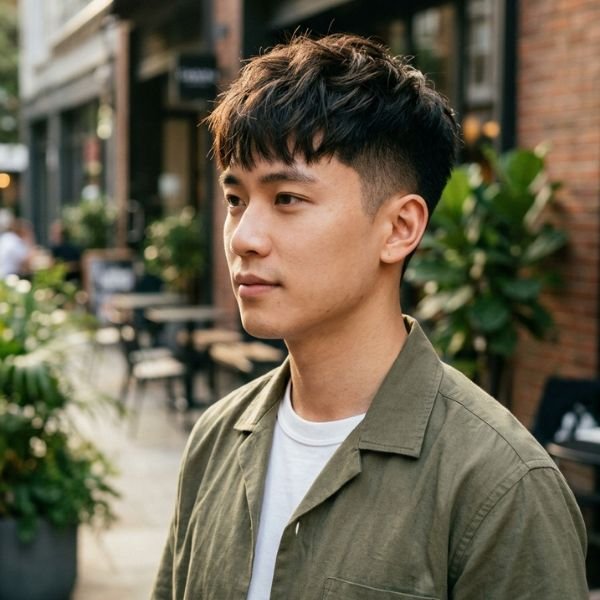
Short tapered sides, about 3 inches of choppy length on top and a fringe resting just above the brow. Most barbers can cut this one in their sleep. A pea-sized dab of matte clay finishes it.
Best for: everyday wear and first-timers.
Messy Textured Fringe
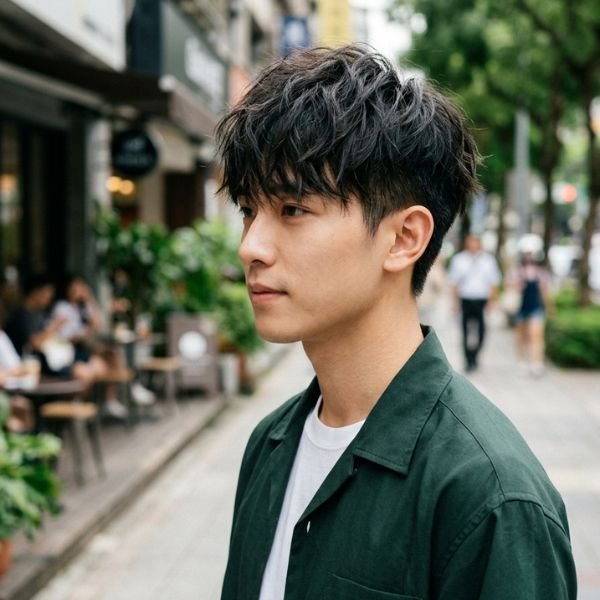
Here the fringe is cut choppier and pushed forward with your fingers. Spray sea salt mist on damp hair first. Then work in matte paste for a lived-in finish.
Best for: casual weekends and relaxed offices.
Short Textured Fringe
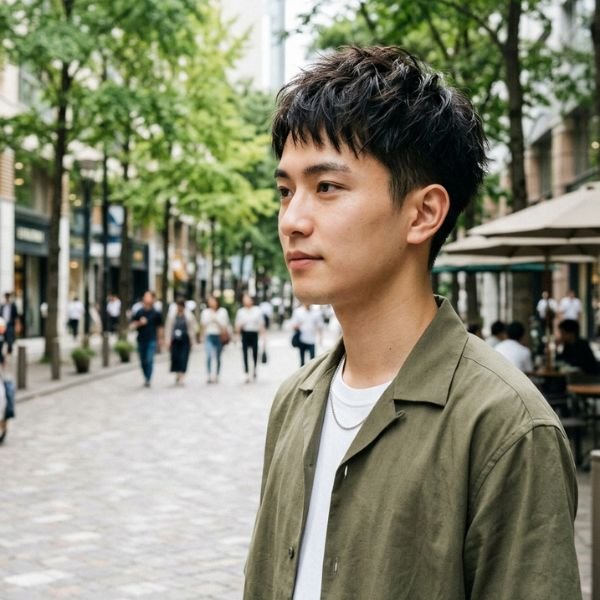
Keep about 2 inches on top and stop the fringe above the eyebrows. A slightly tighter taper sharpens the outline. Styling takes seconds.
Best for: busy mornings and active lifestyles.
Long Textured Fringe
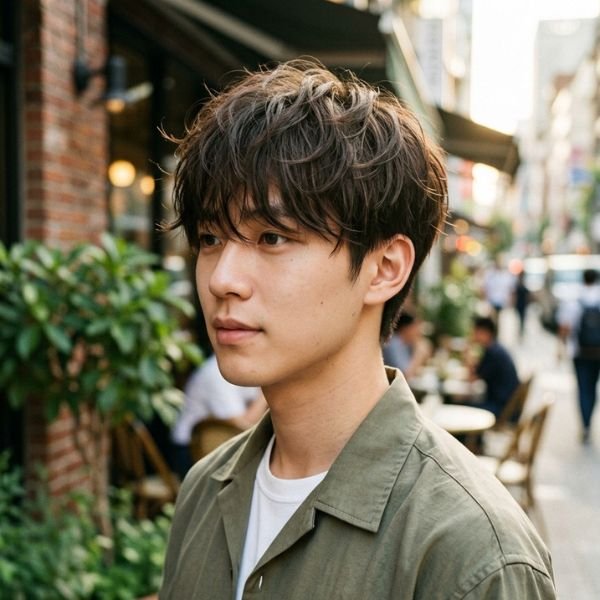
Leave 4 to 5 inches on top so the fringe reaches the brows. Blow dry it forward for sweep. Use a light cream instead of heavy wax, because long hair weighs down fast.
Best for: thick or wavy hair that holds length.
Textured Fringe with Thick Hair

Dense hair needs weight removed. Ask for internal layering or thinning shears at the roots so the fringe doesn’t puff into a helmet. A texture paste then keeps the pieces separate.
Best for: naturally thick, heavy hair.
Wavy Textured Fringe
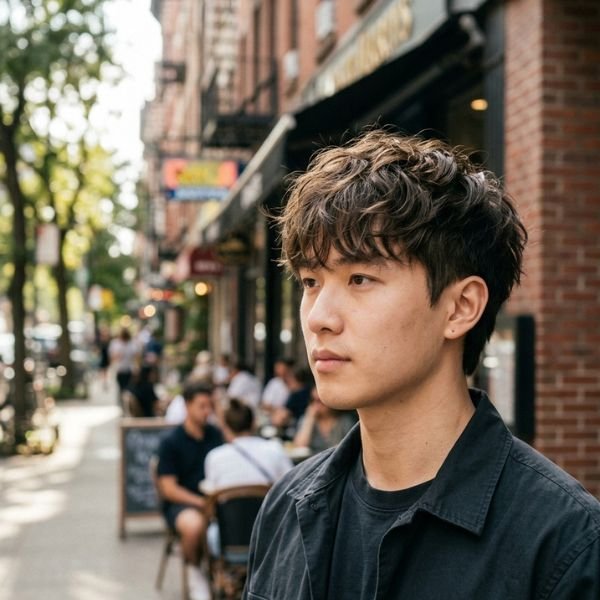
Let the natural bend lead. Ask your barber to check your wave pattern before cutting. Apply curl cream to damp hair, then air dry or diffuse.
Best for: wavy hair and low-effort routines.
Curly Textured Fringe
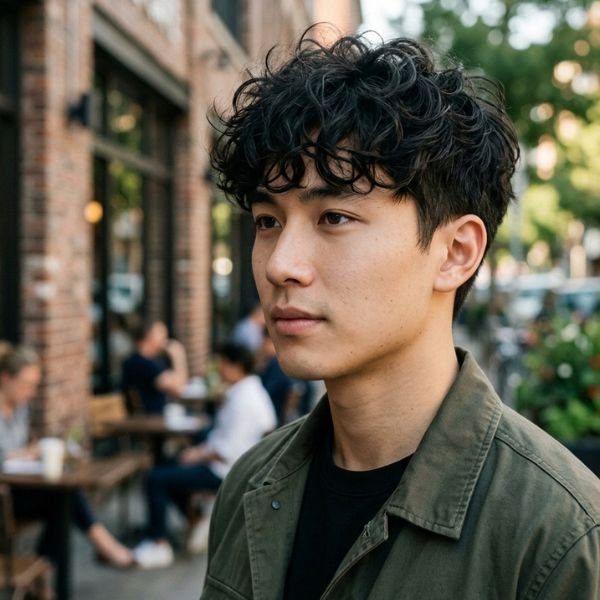
Curls shrink as they dry, so leave the fringe a touch longer. Ask for a dry cut when possible. The low taper makes the curls stand out, and a defining cream keeps frizz in check. Skip the brush.
Best for: curly and coily hair types.
Asian Textured Fringe

Straight, dense hair tends to fall flat. Request choppy layers with point cutting. Then add texture powder at the roots and blow dry for lift.
Best for: straight, thick hair that needs volume.
French Crop Textured Fringe
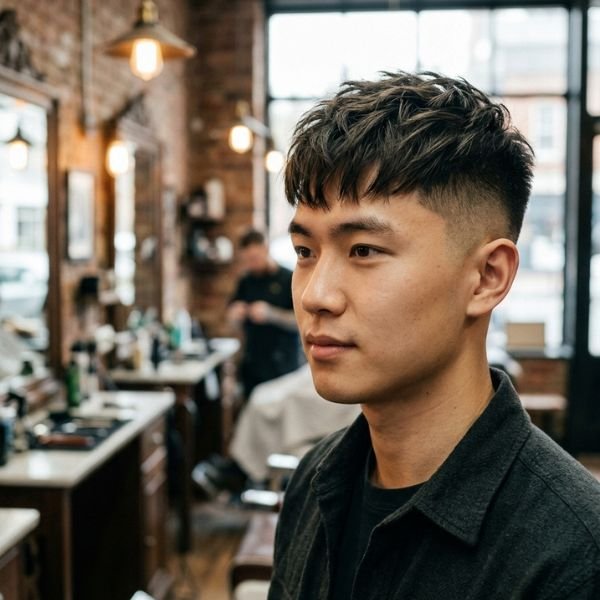
This one uses a short, blunt fringe, roughly 1 to 1.5 inches, cut straight across. It carries less texture than the others. A blunt line also helps balance a taller forehead.
Best for: professional settings and shorter hair.
Side-Swept Textured Fringe
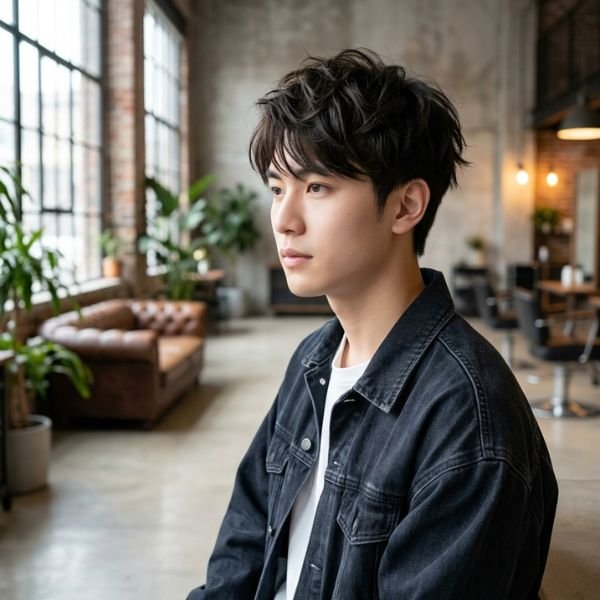
Comb the fringe to one side and pair it with a soft part. Blow dry in the direction of the sweep. A light hold cream keeps it in place without stiffness.
Best for: a polished, dressed-up look.
Spiky Textured Fringe

Think of this as a twist on the cut rather than a core version. Spikes add attitude. Dry the roots upward, then use a strong hold paste to set the pieces.
Best for: guys who enjoy daily styling.
Fluffy Textured Fringe
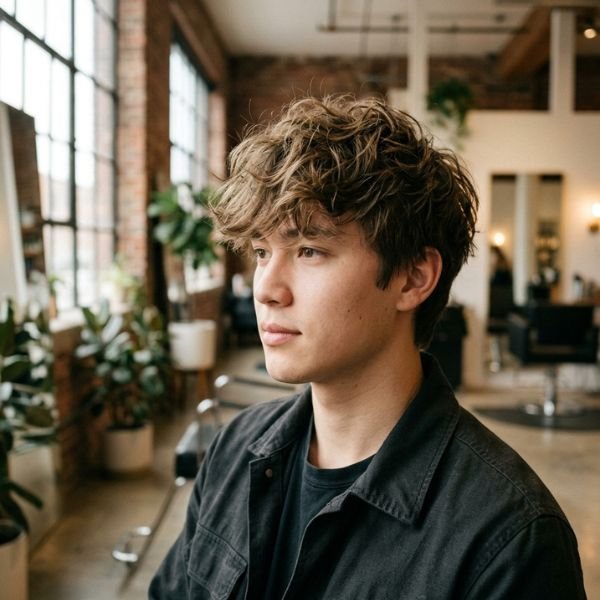
Volume beats sharpness here. Work mousse through damp hair and dry it with a round brush. The result looks soft and full.
Best for: fine or medium hair that needs a boost.
Textured Fringe with Beard
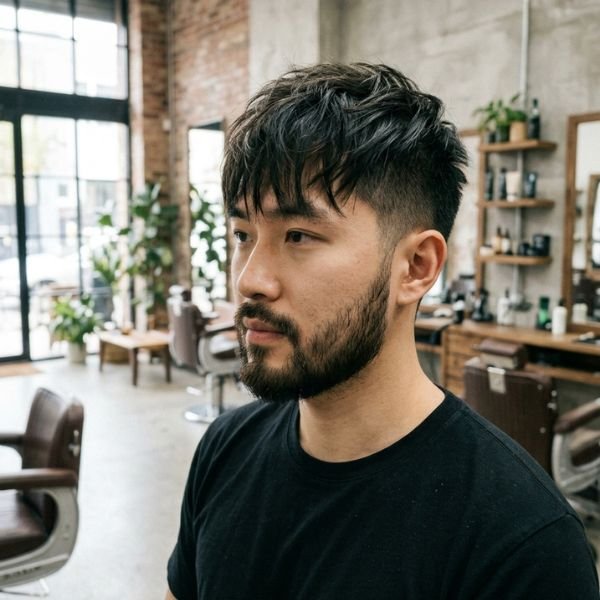
A beard and a taper share one logic: gradual shortening. Ask your barber to connect the taper to the sideburn and beard line. Trim both on the same schedule so the blend stays smooth.
Best for: men with fuller facial hair.
Modern Textured Fringe

This version mixes a slightly lower taper with a piecey, razor-cut fringe. The ends look wispy and light. It feels current without being extreme.
Best for: trend followers who want a fresh take.
Textured Fringe with Undercut
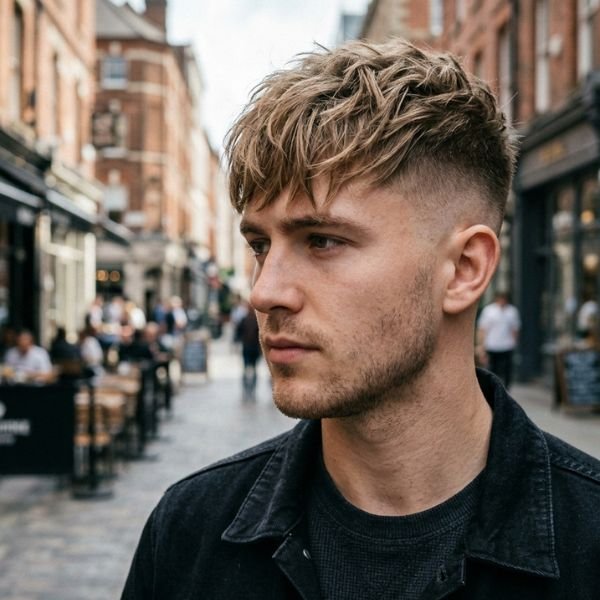
A true undercut is disconnected, which makes it a bolder cousin of the taper. Ask for a low taper with extra contrast if you want a safer option. Expect more frequent trims either way.
Best for: guys who like strong contrast between sides and top.
Textured Fringe with Line Up
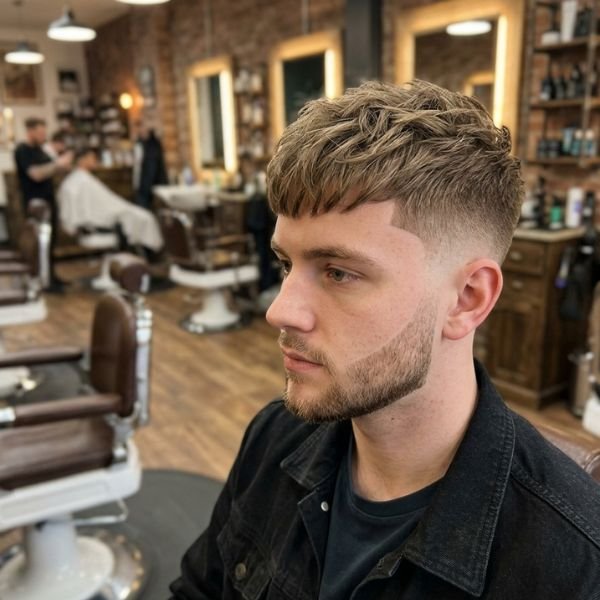
A trimmer sharpens the hairline and gives the cut a barbershop finish. It looks crisp for about two to three weeks. After that, the edges start to blur.
Best for: regular barber visitors who like sharp detail.
Textured Fringe with Middle Part

Split the fringe down the center so it falls evenly on both sides. Leave 3 to 4 inches on top. Straight or wavy hair works best, and a light cream keeps the part from looking stiff.
Best for: a fashion-forward, K-pop inspired look.
How to Ask Your Barber for It
Barbers work from specifics. Give them four details: the top length, the fringe length, the amount of texture and the sides.
Try this script: “Low taper, number 2 at the nape, blending into a 3 or 4 above the ears. Leave about 3 inches on top, point cut, with the fringe sitting at the eyebrows.”
Guard numbers help. A number 1 leaves about one eighth of an inch. A number 2 leaves a quarter inch, and a number 3 leaves three eighths. Bring a photo too. Words describe the cut, but a picture proves it.
How to Maintain a Low Taper Fade Textured Fringe
You can maintain a low taper fade textured fringe with a short wash routine, a light styling product and a trim every 3 to 4 weeks.
Quick Styling Routine
- Wash with a lightweight shampoo so hair doesn’t get weighed down.
- Towel dry until the hair feels slightly damp.
- Blow dry the roots upward with a round brush for lift.
- Warm a pea-sized amount of matte clay or paste between your palms.
- Rake it through the fringe with your fingers, then pinch the ends into pieces.
Mistakes to Avoid
- Using too much product: A heavy hand flattens texture and leaves hair greasy.
- Choosing gel: It glues the fringe into one lump.
- Skipping trims: Even a low taper looks grown out after a month.
- Asking for a blunt fringe: You lose the movement that defines the cut.
- Ignoring your face shape: The wrong fringe length can shorten or stretch your features.
Trim Schedule
Book your barber every 3 to 4 weeks for a sharp look. You can stretch to 5 or 6 weeks if you don’t mind a softer, shaggier blend.
FAQs
Is a low taper fade the same as a low fade?
Not exactly. A low taper is subtler and ends at short stubble, while a low fade usually drops closer to skin.
How long should my hair be for a textured fringe?
Aim for 2 to 4 inches on top. That’s enough length for layers and movement.
Does this haircut work for thinning or receding hair?
Yes, in most cases. The soft taper keeps the hairline natural, and texture creates the look of extra density.
How often should I trim a low taper fade textured fringe?
Every 3 to 4 weeks keeps it crisp. Stretching to 5 or 6 weeks works if you prefer a looser look.
What product is best for a textured fringe?
Matte clay or paste works for most hair types. Fine hair does better with mousse or sea salt spray.
Can curly or coily hair pull off this cut?
Absolutely. Curls add natural texture, and the low taper makes them stand out.
Conclusion
The low taper fade textured fringe earns its popularity by being easy. It looks sharp at work and relaxed on weekends. It also suits nearly every face shape and hair type.
Pick the variation that fits your hair, screenshot a reference photo and use the barber script above. Then keep styling simple. A little clay, a quick blow dry and a trim every month will keep this cut looking right all through 2026.

